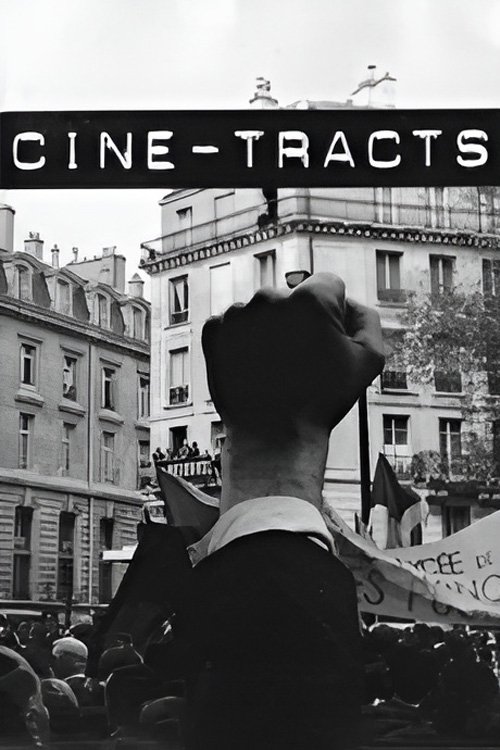
Cinétracts
1968
No user ratings available yet
Representation score: 8.5 out of 10

Representation Score
Good
1970
NRDirector
Jean-Luc Godard, Jean-Henri Roger
Runtime
52 minutes
Average Rating
No ratings yetNew Showbiz Analysis
Jean-Luc Godard’s *British Sounds* is a radical experiment in agitprop filmmaking that favors systemic critique over individual character studies. It functions as a montage of political acts and industrial footage, aiming to deconstruct the relationship between sound and image. The film excels in its cultural and anti-establishment perspective, using a postmodern lens to challenge Western consumerist institutions. This intellectual rigor provides a strong foundation for its progressive, anti-capitalist worldview. However, the documentary's structural choices limit its demographic depth. Because it eschews traditional narrative arcs, it lacks the specific, nuanced representation of LGBTQ+, gender, and disability identities required for a higher diversity score.
Category Breakdown
While the film does not explicitly center LGBTQ+ identities, it critiques straight-centered consumer culture, offering a subtle disruption of traditional social norms.
The film focuses on production mechanics and the sound-image relationship, avoiding reinforcement of conventional gender hierarchies. However, it lacks specific, nuanced depictions of women's roles.
Documentary footage captures a wide range of urban and industrial life, providing a varied socioeconomic lens despite not prioritizing non-Anglo-Saxon majority.
The film dismantles the commodity fetishism of Western consumer culture, challenging Western institutional power and the spectacle of modern life through a post-structuralist framework.
The film does not feature characters with visible or invisible disabilities as central subjects, focusing instead on macro-level societal structures.
Present on Screen
Limited or Absent
Official Synopsis
Jean-Luc Godard brings his firebrand political cinema to the UK, exploring the revolutionary signals in late '60s British society. Constructed as a montage of various disconnected political acts (in line with Godard's then appropriation of Soviet director Dziga Vertov's agitprop techniques), it combines a diverse range of footage, from students discussing The Beatles to the production line at the MG factory in Oxfordshire, burnished with onscreen political sloganeering.
1968
1929

1971

1965

1968

1970
1977

1969
No reviews yet. Be the first to share your thoughts on this movie!
Use the rating form above to leave a star rating and optional review.