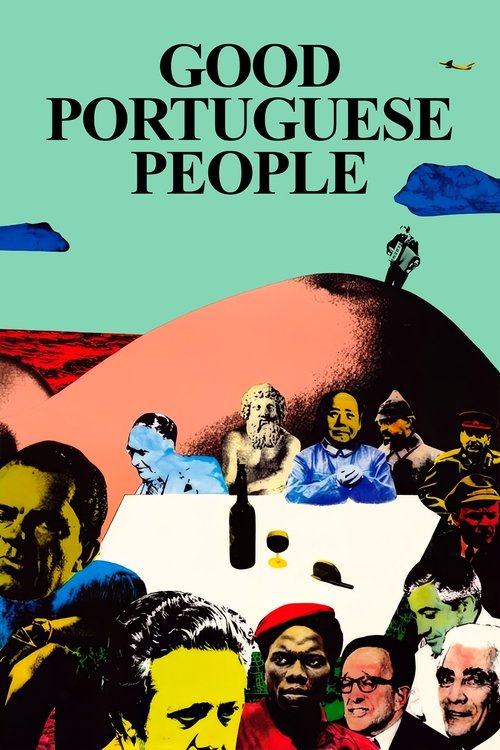
Good Portuguese People
1981
No user ratings available yet
Representation score: 5.3 out of 10
Representation Score
Excellent
1977
Director
Manuel Costa e Silva, António da Cunha Telles, Acácio de Almeida, António de Macedo, José de Sá Caetano, António Escudeiro, Henrique Espírito Santo, José Fonseca e Costa, Luís Galvão Teles, Eduardo Geada, Fernando Lopes, Fernando Matos Silva, Moedas Miguel, João César Monteiro, Glauber Rocha, Elso Roque, Alberto Seixas Santos, Artur Semedo, João Matos Silva, António-Pedro Vasconcelos
Runtime
82 minutes
Average Rating
No ratings yetNew Showbiz Analysis
As a collaborative documentary, the film functions as a collective archival tapestry of the Carnation Revolution. Its strength lies in granting ability to act to the populace, allowing them to drive the narrative rather than serving as passive subjects of a state-sanctioned history. The work succeeds in its systemic critique, using a decentralized directorial approach to document the transition from authoritarianism to democracy. By capturing the collapse of rigid social hierarchies, it provides a vital record of a society moving toward a more pluralistic framework. However, the film's focus on rapid-response political events limits its depth regarding specific identity-based representation. While it challenges institutional power, it lacks explicit visibility for underrepresented groups like the LGBTQ+ community or individuals with disabilities.
Category Breakdown
The film focuses on macro-political movements and street-level activism during the revolution. There is no evidence of specific narratives or character arcs centered around LGBTQ+ individuals.
The documentary centers the ability to act of the people in the streets, disrupting traditional hierarchies. Women are shown actively participating in political discourse, challenging domestic-centric roles.
The film captures the collapse of the Estado Novo and its imperialist frameworks. This deconstruction implicitly engages with the dismantling of systems that historically underrepresented non-white populations.
The work critiques traditional Western institutional power and religious pillars. It prioritizes secular, revolutionary, and collective movements over the singular morality of the established state.
The film focuses on the kinetic energy of political actors and the masses. There is little to no evidence of intentional representation regarding neurodivergence or physical disabilities.
Present on Screen
Limited or Absent
Official Synopsis
Film directors with hand-held cameras went to the streets of Lisbon from April 25 to May 1, 1974, registering interviews and political events of the Portuguese "Carnation Revolution", as that period would be later known.
1981
2017

1989

2002
2017
2015
1967
2019
No reviews yet. Be the first to share your thoughts on this movie!
Use the rating form above to leave a star rating and optional review.