The Inextinguishable Fire
1969
No user ratings available yet
Diversity score: 5.7 out of 10
1986
Director
Harun Farocki
Runtime
72 minutes
Average Rating
No ratings yetSynopsis
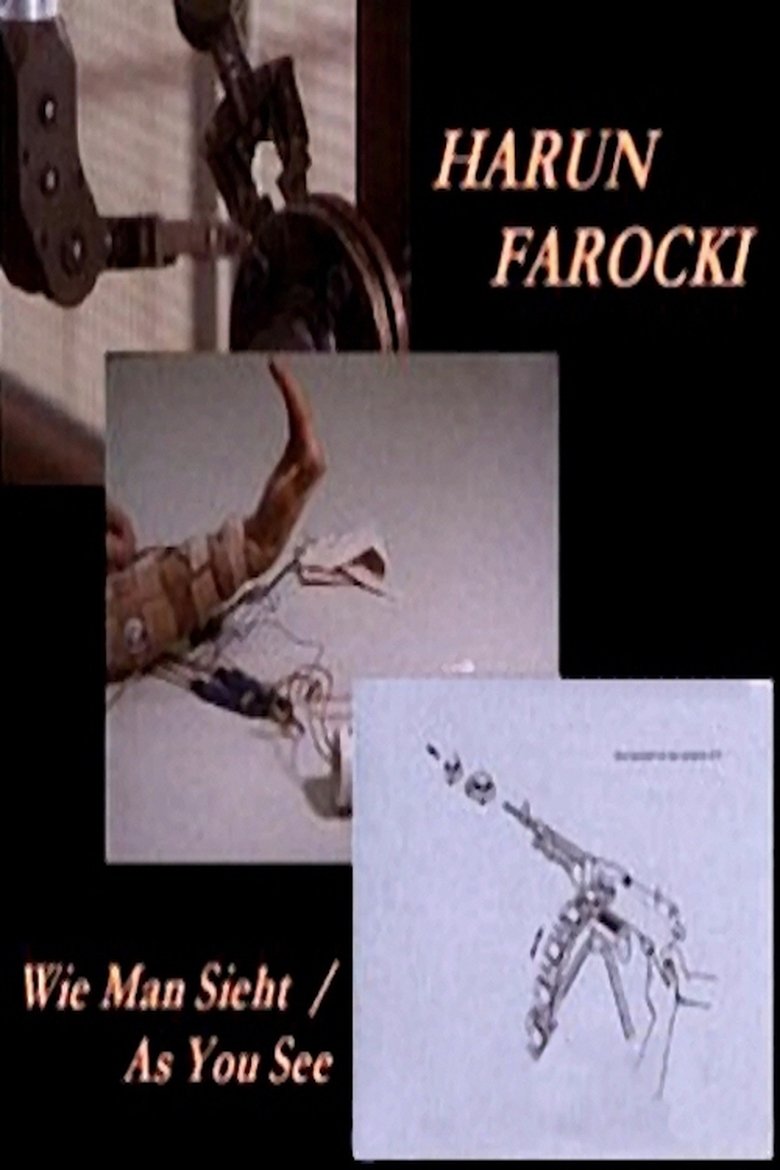
In 'As You See', Farocki searches for those instances and facts in the history of technology that have been overlooked or ignored, also exploring the ambivalent relationship between technologies developed for civil use and those designed for military purposes. Thus the film for instance describes how in the 1970s workers at the British arms factory Lucas Aerospace attempted to develop socially useful products to replace the company's military output. Rather than following a linear argument, this essay-film juxtaposes disparate images and weaves them into a mosaic-like structure which makes it possible for the viewers to make their own connections between the different images as well as between the images and the commentary.
Overall Score
Good
Category Breakdown
LGBTQ+ Representation
The film lacks explicit LGBTQ+ characters or narratives. Its focus remains on industrial labor and technological history rather than identity-driven storytelling.
Gender Representation
The documentary examines industrial landscapes and labor movements. While it deconstructs masculine hierarchies tied to warfare, it lacks specific gendered character arcs.
Racial & Ethnic Diversity
The narrative explores global technological histories and socio-political implications. However, the focus on British aerospace history limits the visible breadth of racial diversity.
Religious & Cultural Diversity
Farocki uses a mosaic structure to critique the military-industrial complex. The film challenges the morality of Western technological advancement and institutional power.
Disability Representation
There is no information regarding the depiction of physical or neurodivergent disabilities in this work.
Strengths
Areas for Improvement
AI Analysis
Harun Farocki’s essay-film functions as a sophisticated critique of systemic power. By juxtaposing military technology with socially useful civilian alternatives, the work challenges the prioritization of destruction over social utility. The film's strength lies in its intellectual depth and its subversion of traditional documentary linearity. It encourages viewers to question the relationship between visual perception and industrial tools. However, the documentary's focus on specific industrial histories and technological processes results in a lack of explicit representation for various identity groups. The narrative prioritizes systemic analysis over individual character-driven diversity.
1969

1990

1983

1991
1981
1973

1960
1982

1968

2008

1977

1979
No reviews yet. Be the first to share your thoughts on this movie!
Use the rating form above to leave a star rating and optional review.