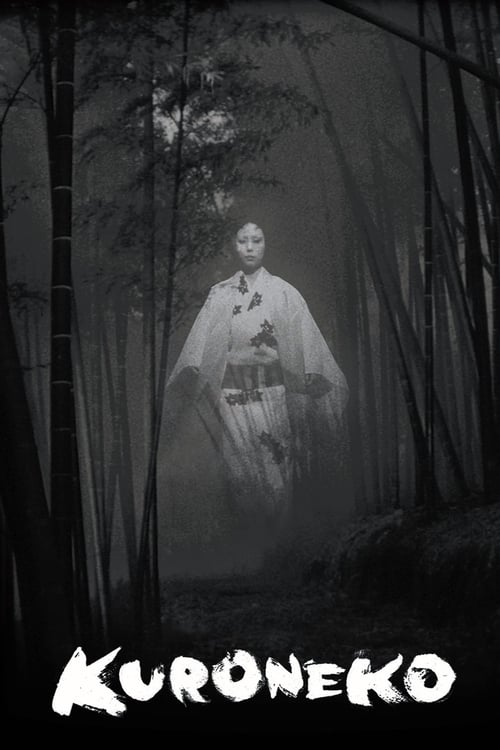
Kuroneko
1968
No user ratings available yet
Diversity score: 6.0 out of 10

1964
Not RatedDirector
Kaneto Shindō
Runtime
105 minutes
Average Rating
No ratings yetSynopsis
While her son, Kichi, is away at war, a woman and her daughter-in-law survive by killing samurai who stray into their swamp, then selling whatever valuables they find. Both are devastated when they learn that Kichi has died, but his wife soon begins an affair with a neighbor who survived the war, Hachi. The mother disapproves and, when she can't steal Hachi for herself, tries to scare her daughter-in-law with a mysterious mask from a dead samurai.
Overall Score
Good
Category Breakdown
LGBTQ+ Representation
The film lacks any discernible presence of queer subtext or non-cisnormative identities. The plot focuses strictly on the survivalist dynamics between two women and a male neighbor.
Gender Representation
The narrative disrupts traditional hierarchies by centering women who operate outside the domestic sphere. These protagonists exercise extreme agency through violence and cunning rather than submissive roles.
Racial & Ethnic Diversity
Set in Sengoku-era Japan, the cast is ethnically homogeneous. The film maintains historical authenticity to its period setting rather than utilizing color-blind casting.
Religious & Cultural Diversity
The story rejects institutional morality for a framework of situational ethics. It portrays the breakdown of societal norms as an inevitable consequence of systemic instability and war.
Disability Representation
No specific depictions of visible or invisible disabilities are central to the narrative arc.
Strengths
Areas for Improvement
AI Analysis
Onibaba is a profound deconstruction of social roles that prioritizes character agency over traditional tropes. By centering women in positions of violent, decisive power, the film subverts the expectation of the nurturing female archetype found in many historical dramas. The film's strength lies in its existentialist approach to morality. It replaces state or religious righteousness with a gritty survivalism, framing theft and violence as necessary mechanisms for life in a lawless environment. While the film lacks contemporary identity-based diversity and remains ethnically homogeneous due to its historical setting, its narrative architecture remains progressive. It challenges established social hierarchies through a visceral exploration of human instinct.
1968

1968
1949

1972

2004
1957

2008
1949
1990
2001

2019

2002
No reviews yet. Be the first to share your thoughts on this movie!
Use the rating form above to leave a star rating and optional review.