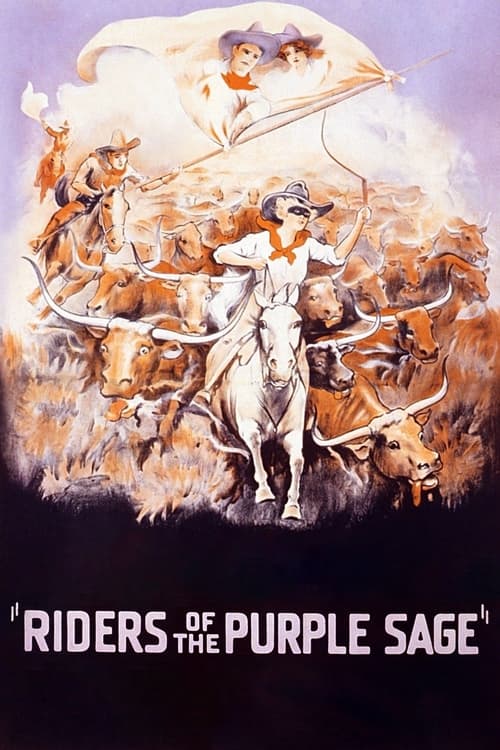
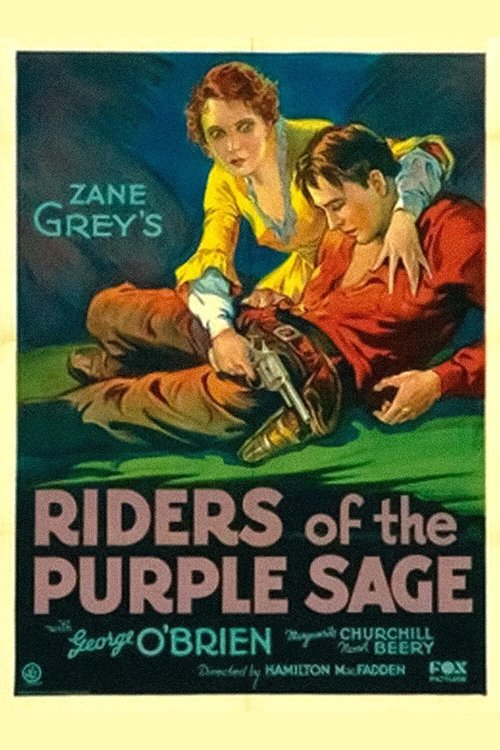
Riders of the Purple Sage
1925
No user ratings available yet
Representation score: 0.6 out of 10
Representation Score
Minimal
1931
PassedDirector
Hamilton MacFadden
Runtime
58 minutes
Average Rating
No ratings yetNew Showbiz Analysis
Riders of the Purple Sage is a classic 1930s Western that upholds the social hierarchies of its time. The film relies on traditional Western clichés, emphasizing frontier justice and romanticism over critical commentary on society. While the narrative offers some complexity around the impact of religious institutions on personal morality, it lacks diversity. The cast is uniform, and the character dynamics adhere to established patriarchal and straight-centered norms. Ultimately, the film operates as a standard genre piece. It fails to challenge conventional expectations regarding race, gender, or identity, reflecting the social landscape of early 20th-century filmmaking.
Category Breakdown
The film contains no LGBTQ+ characters or representations of non-straight relationships. The narrative centers on traditional heterosexual romance and social structures.
Jane Withersteen's role is shaped by religious and social pressures. Her influence is significant, but she is primarily defined by her relationship to the male protagonist and the patriarchal norms of the time.
The film features a predominantly white cast, which aligns with the casting standards of the 1930s. There are no significant non-white characters or diverse casting choices.
The story delves into the tension between personal morality and institutional religion. It highlights the persecution of Jane Withersteen but frames this as a typical conflict between the individual and the community.
There are no characters with visible or invisible disabilities in the film. No such characters play central roles or have specific ability to act.
Present on Screen
Limited or Absent
Official Synopsis
Lassiter's sister was killed and her young daughter taken and raised by outlaws. Years later Lassiter arrives at the Withersteen ranch looking for the now grown daughter. He immediately gets caught up in the ranch's struggle against rustlers. Trailing a rustled herd of horses leads him to the rustler's hideout and the missing daughter.
1925
1930
1932
1935
1918
1938
1932
1929
No reviews yet. Be the first to share your thoughts on this movie!
Use the rating form above to leave a star rating and optional review.