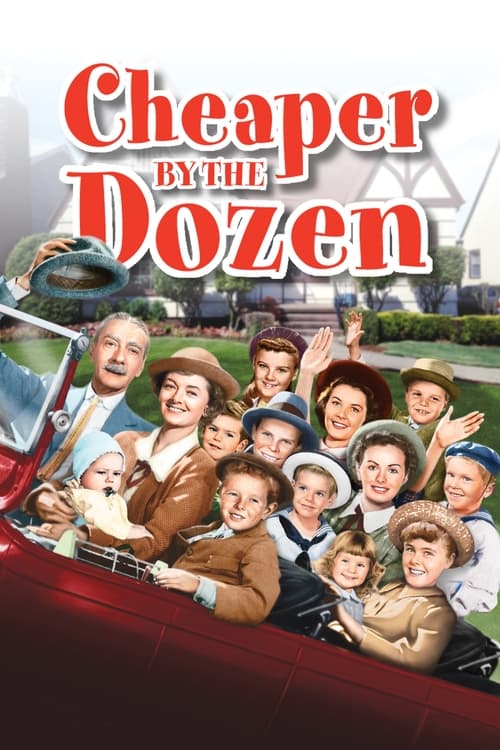
Cheaper by the Dozen
1950
No user ratings available yet
Representation score: 0.3 out of 10
Representation Score
Minimal
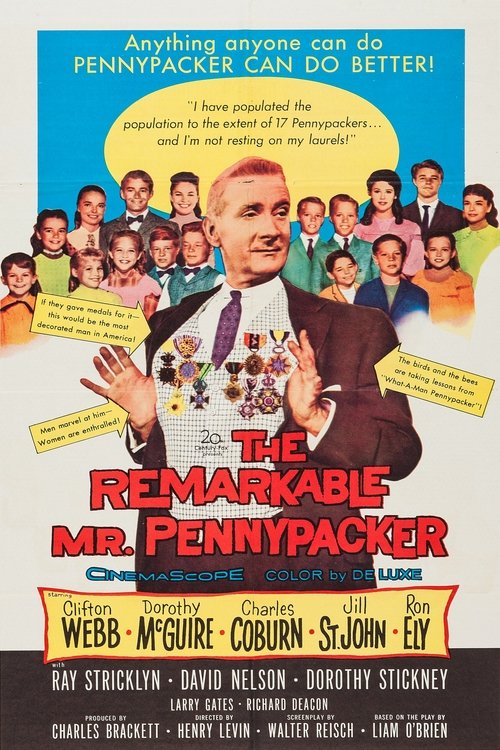
1959
ApprovedDirector
Henry Levin
Runtime
87 minutes
Average Rating
No ratings yetNew Showbiz Analysis
The Remarkable Mr. Pennypacker is a classic mid-century domestic comedy that aligns closely with the social norms of the late 1950s. The story centers around traditional family units and civic stability, without challenging the status quo. The film’s representation is narrow, focusing on a single, homogeneous perspective of domestic life. It does not offer multi-layered complexity or expand the visibility of underrepresented identities. Instead, it reinforces the established social norms of the era. Ultimately, the production serves to uphold the traditional values of the time, emphasizing the male experience of balancing public and private responsibilities within a conservative framework.
Category Breakdown
The film does not include any visible LGBTQ+ characters or explore non-straight identities. It focuses solely on straight and cisgender relationships.
Female characters, like those played by Shirley Booth, play supportive roles in the home, reinforcing traditional gender roles.
The cast and setting reflect the demographics of the time, with no meaningful representation of non-white characters.
The film upholds traditional Western values about family and civic duty without challenging any cultural institutions.
No characters with visible or invisible disabilities are central to the story. There are no depictions of neurodivergence or chronic illness driving the plot.
Present on Screen
Limited or Absent
Official Synopsis
In early 1900s' Pennsylvania, Mr. Pennypacker has two company offices and two families with a combined total of 17 children. With an office in Harrisburg and an office in Philadelphia, he has successfully kept two separate homes. However, when an emergency requires his oldest son to find him, Mr. Pennypacker's dual life is revealed.
1950
1968
1949
1958
1956

1976
1955
1958
No reviews yet. Be the first to share your thoughts on this movie!
Use the rating form above to leave a star rating and optional review.