
Witwer mit 5 Töchtern
1957
No user ratings available yet
Diversity score: 2.2 out of 10
1958
Director
Erich Engels
Runtime
95 minutes
Average Rating
No ratings yetSynopsis
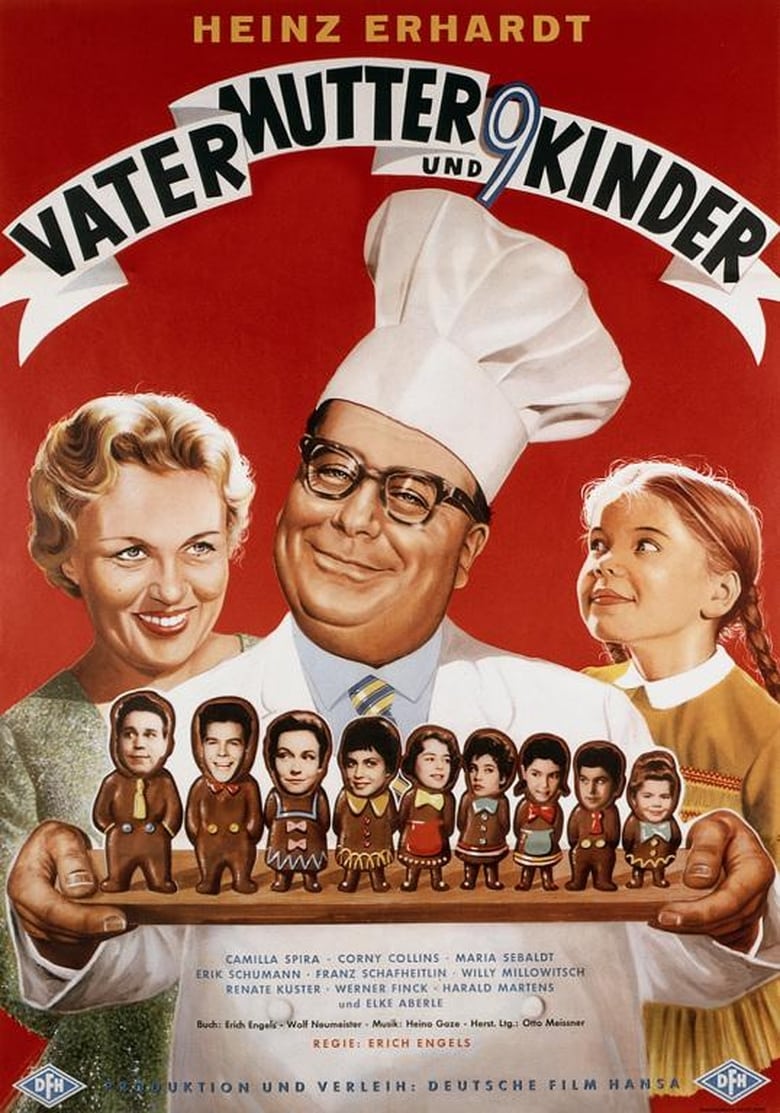
Friedrich Schiller, a respected baker in Einbeck, enjoys a seemingly idyllic life with his wife and nine children. As he approaches his silver wedding anniversary, he nearly succumbs to a fleeting liaison with a spirited woman named Lollo. Though the episode ends harmlessly, it awakens a crisis of conscience in Friedrich, threatening the harmony of his devoted family.
Overall Score
Minimal
Category Breakdown
LGBTQ+ Representation
The film contains no discernible representation of queer narratives or non-heteronormative identities. Romantic dynamics are strictly centered on the heteronormative marriage between Friedrich and his wife.
Gender Representation
The narrative reinforces traditional hierarchies, positioning Friedrich as the patriarchal provider. Female roles are defined by domestic management and the maintenance of family harmony.
Racial & Ethnic Diversity
The film features a homogeneous, white German cast. There is an absence of racial or ethnic plurality, reflecting the localized, middle-class focus of 1958 West Germany.
Religious & Cultural Diversity
The story celebrates traditional Western institutions, specifically the nuclear family. It promotes a conventional morality where social order is maintained through the sanctity of the household.
Disability Representation
There are no visible or invisible disabilities portrayed with agency. No characters are defined by neurodivergence or physical impairment.
Strengths
Areas for Improvement
AI Analysis
This mid-century West German comedy functions as a reinforcement of traditional social structures. It prioritizes the stability of the nuclear family and the preservation of patriarchal and maternal archetypes over any form of social disruption. The film's architecture is built upon the restoration of domestic order. By focusing on a crisis of conscience regarding marital fidelity, the narrative ultimately validates the existing social hierarchy of the 1950s. Ultimately, the work lacks the intentionality required to represent marginalized identities. It serves as a period-specific artifact that upholds the status quo rather than challenging established cultural power dynamics.
1957
1959
1959
1968
1949
1965

2013
1930
1972
1943

2024
1967
No reviews yet. Be the first to share your thoughts on this movie!
Use the rating form above to leave a star rating and optional review.