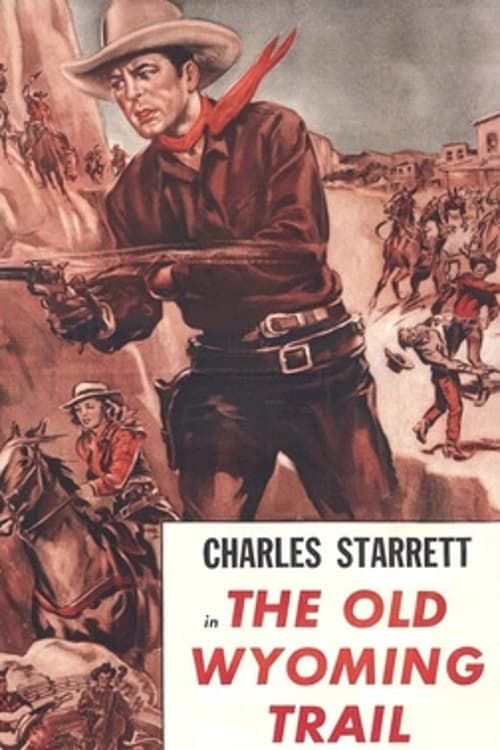
The Old Wyoming Trail
1937
No user ratings available yet
Representation score: 1.7 out of 10

Representation Score
Minimal
1941
PassedDirector
Lambert Hillyer
Runtime
58 minutes
Average Rating
No ratings yetNew Showbiz Analysis
Prairie Stranger is a conventional B-Western that prioritizes genre clichés over social complexity. The narrative architecture is built around a traditional masculine hero, Dr. Steve Monroe, and his sidekick, Bones, navigating a standard frontier conflict involving livestock poisoning. The film functions as a product of its time, reinforcing the established social hierarchies of the early 1940s. It lacks depth in reflecting multiple aspects of identity, focusing instead on the restoration of stability and the protection of property within a small Nevada town. Ultimately, the film offers no disruption of conventional social expectations, serving instead as a straightforward example of the era's linear morality and frontier archetypes.
Category Breakdown
The film does not include any LGBTQ+ characters or narratives. It follows the standard heterosexual social norms typical of 1941 Western cinema.
The story centers on male protagonist Dr. Steve Monroe and his sidekick, Bones. It emphasizes traditional masculine authority and lacks significant women's ability to drive the story.
The film aligns with the era's demographic norms, featuring a likely homogeneous white cast. There is no evidence of non-white ability to act or diverse ethnic representation.
The narrative focuses on restoring order and protecting property within a frontier community. It reinforces traditional social and legal structures rather than critiquing them.
No characters are depicted navigating physical or neurodivergent identities. Disability is entirely absent from the narrative framework.
Present on Screen
Limited or Absent
Official Synopsis
Charles Starrett is once more cast as frontier doctor Steve Monroe in Columbia's Prairie Stranger. In the company of his comic sidekick, mail-order intern Bones (Cliff Edwards), Dr. Monroe sets up his shingle in a small Nevada town. When business is slow, Monroe and Bones take jobs as ranch-hands on a cattle spread, and while thus employed try to solve a series of mysterious livestock poisonings.
1937
1940
1947
1947
1943
1946
1939
1944
No reviews yet. Be the first to share your thoughts on this movie!
Use the rating form above to leave a star rating and optional review.