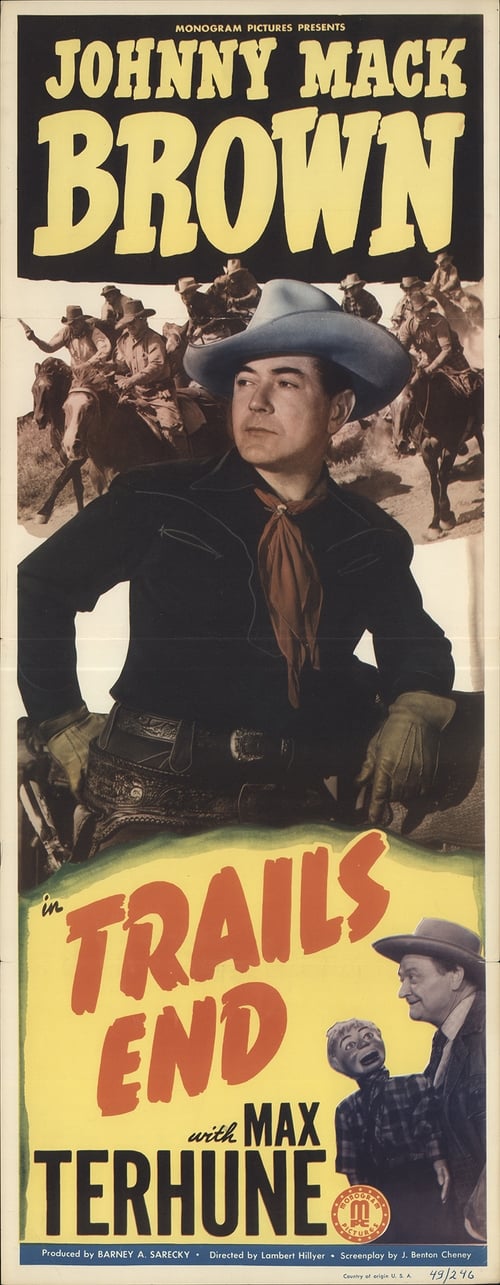
Trails End
1949
No user ratings available yet
Representation score: 0.4 out of 10
Representation Score
Minimal
1949
ApprovedDirector
Ray Taylor
Runtime
59 minutes
Average Rating
No ratings yetNew Showbiz Analysis
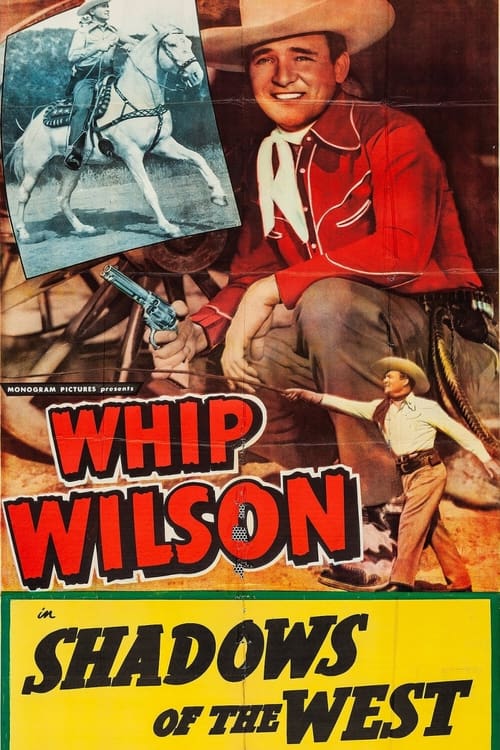
Shadows of the West is a standard B-movie Western that adheres strictly to the social hierarchies of 1949. The film prioritizes traditional frontier archetypes and linear morality tales, offering little in the way of narrative subversion. The story focuses on masculine-coded law enforcement figures, such as Whip Wilson and Winks Grayson, who drive the action. This emphasis on male leadership and physical competence reinforces the era's gender norms. Culturally, the film functions as a reinforcement of established social structures. By centering the conflict on the restoration of legal authority and the protection of the nuclear family, it aligns with the period's conventional values.
Category Breakdown
The film follows a traditional framework that assumes everyone is straight or cisgender. There are no depictions of non-traditional gender identities or same-sex relationships.
The narrative focuses on masculine-coded law enforcement figures and emphasizes male-centric conflict and the restoration of patriarchal order.
The cast appears to be a homogeneous Anglo-Saxon majority. The story centers on internal community dynamics rather than engaging with diverse backgrounds.
The film reinforces mid-century ideals of patriotism and the sanctity of the law. It validates existing social structures through the restoration of justice.
There is no evidence of characters with visible or invisible disabilities in the narrative.
Present on Screen
Limited or Absent
Official Synopsis
U.S. Marshal Whip Wilson (Whip Wilson) decides to take a vacation and visit his old friend Winks Grayson (Andy Clyde), the ex-sheriff. Upon his arrival Whip learns of Winks' suspicions regarding newly-elected Sheriff Tanner (William Ruhl as William H. Ruhl), and the story of a frame-up of Paul Davis (Ted Adams) and his son Bud (Riley Hill), now being released from prison. Following a holdup and a killing, a band of outlaws hide at the Davis ranch, implicating them again. Paul is hot and Bud goes to jail. Whip and Winks work to clear Bud and expose the real leader of the outlaw gang.
1949
1958

1944
1949
1945
1942
1946
1945
No reviews yet. Be the first to share your thoughts on this movie!
Use the rating form above to leave a star rating and optional review.