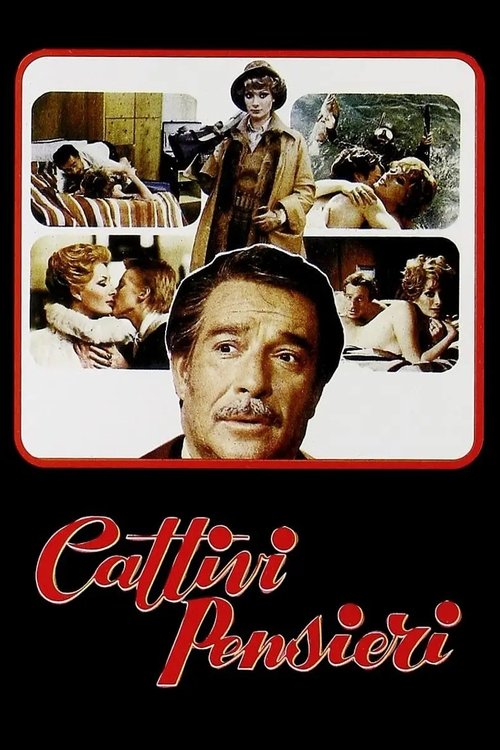
Evil Thoughts
1976
No user ratings available yet
Diversity score: 3.9 out of 10

1967
Director
Ugo Tognazzi
Runtime
112 minutes
Average Rating
No ratings yetSynopsis
In this unusual offbeat black comedy directed by Ugo Tognazzi, Giuseppe (Tognazzi) is a middle-aged industrialist obsessed with gadgets. When his nose starts to whistle uncontrollably, he checks into a clinic to resolve the problem. What begins as a minor affliction worsens, and Giuseppe is placed on a different floor as his ailments multiply. The sicker he gets, the higher he goes up in the floors of the clinic, until he is near death's door.
Overall Score
Limited
Category Breakdown
LGBTQ+ Representation
The film lacks LGBTQ+ characters or narratives. The central conflict remains rooted in a singular, heteronormative fixation centered on the male protagonist's voyeurism.
Gender Representation
Gender dynamics are dominated by the male gaze, positioning female characters as objects of observation. They function primarily as catalysts for the protagonist's psychological shifts rather than independent agents.
Racial & Ethnic Diversity
The setting depicts a homogeneous urban environment typical of 1960s Europe. There is no significant evidence of racial or ethnic diversity within the cast or social setting.
Religious & Cultural Diversity
The film offers a sophisticated critique of capitalist urbanism and modern alienation. It prioritizes existentialist themes over traditional religious or moral frameworks, focusing on the individual's struggle against impersonal systems.
Disability Representation
The protagonist's psychological instability serves as a plot device for his breakdown. The film lacks a nuanced exploration of neurodivergence or meaningful disability representation.
Strengths
Areas for Improvement
AI Analysis
The Seventh Floor is a specialized psychological study that prioritizes existentialist and postmodern themes over demographic variety. It succeeds in critiquing the alienation of the individual within a capitalist, high-rise urban landscape. However, the film fails to provide intersectional breadth. The narrative is heavily centered on a singular male perspective, leaving little room for diverse identities or agency for women and minority groups. Ultimately, the film's focus on social detachment and architectural verticality comes at the expense of a diverse and inclusive cast.
1976
1988
1953
1952
1996
1983
1958
1965
1976

1993
1949
1957
No reviews yet. Be the first to share your thoughts on this movie!
Use the rating form above to leave a star rating and optional review.