The Adventuress from the Floor Above
1941
No user ratings available yet
Representation score: 1.5 out of 10
Representation Score
Fair
1976
Director
Ugo Tognazzi
Runtime
105 minutes
Average Rating
No ratings yetNew Showbiz Analysis
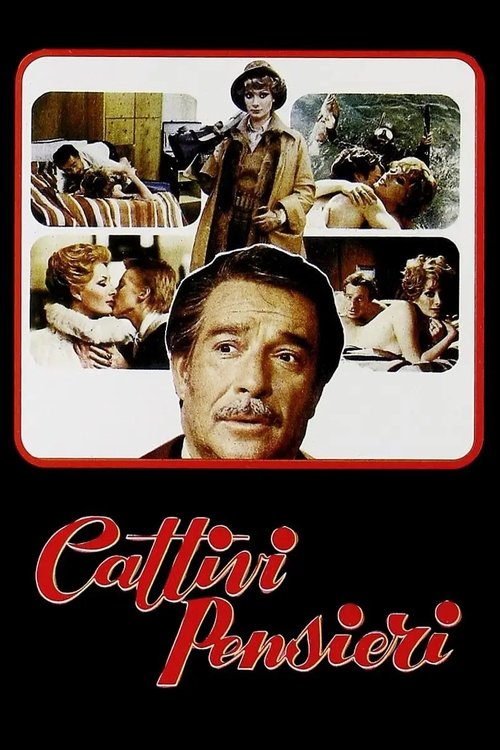
Evil Thoughts is a character study of bourgeois neurosis that prioritizes psychological fragmentation over demographic breadth. It succeeds in deconstructing the myth of the infallible patriarchal leader, showing the fragility of the traditional middle-class family structure. However, the film remains limited by its narrow focus. The narrative relies heavily on familiar heterosexual patterns and lacks racial or multi-layered diversity, reflecting the homogeneous social environment of 1970s Milan. Ultimately, while the film offers a progressive critique of social stability, it treats mental health and gender roles through a lens of comedic dysfunction rather than deep, representative portrayals.
Category Breakdown
The story revolves around heterosexual concerns and infidelity. Although a young man's presence introduces a non-traditional element, there is no clear indication of queer identity or critique.
Female characters are often portrayed through the protagonist's suspicion rather than as independent agents. However, the film dismantles patriarchal stability by depicting the male lead's authority as a fragile facade.
The setting reflects a homogeneous Mediterranean social environment typical of 1970s Italy. There is no evidence of diverse racial casting or non-white perspectives within this social context.
The film critiques Western middle-class institutions by deconstructing the 'ideal' family. It emphasizes psychological instability and subjective morality over traditional social or moral certainty.
The protagonist's paranoia and obsession highlight mental health struggles. These symptoms are primarily used as sources of comedic tension rather than nuanced portrayals of neurodivergence.
Present on Screen
Limited or Absent
Official Synopsis
Mario Marani is a well-respected lawyer in late 70s Milan, with a wonderful wife and a high social life. But Mario has a problem: every time he sees his wife talking to one of their friends he immediately visualises them in a hot affair. His jealousy spirals out of control, until a young man who hides inside their flat crosses his path.
1941
1973
1975
1970
1976

1966

1967
1980
No reviews yet. Be the first to share your thoughts on this movie!
Use the rating form above to leave a star rating and optional review.