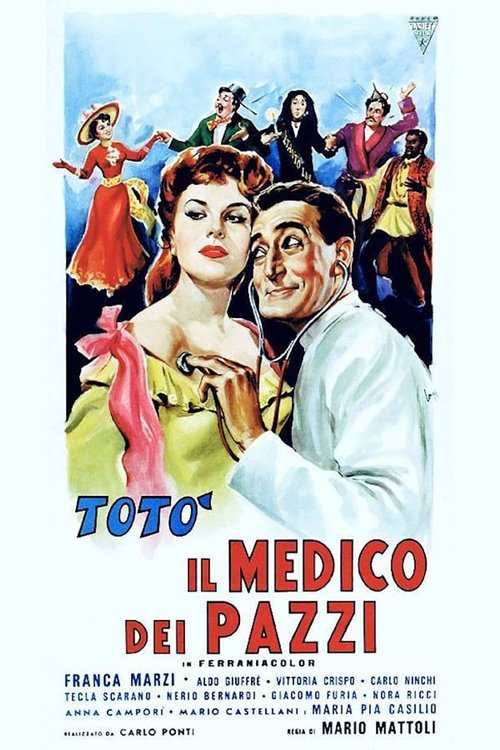
Il medico dei pazzi
1954
No user ratings available yet
Representation score: 2.3 out of 10
Representation Score
Limited
1957
Director
Mario Monicelli
Runtime
102 minutes
Average Rating
No ratings yetNew Showbiz Analysis
Mario Monicelli’s comedy serves as a social satire of provincial life, focusing on the tension between modernity and tradition. The film critiques authority by pitting institutional science against folk-based healing, highlighting rigid social hierarchies. However, the work remains anchored in the era's standard social compositions. It lacks representation of LGBTQ+ identities and maintains a heavily male-centric narrative structure. The racial and ethnic landscape is localized and uniform, reflecting the demographic reality of 1950s Italy. Ultimately, the film's value lies in its institutional skepticism rather than diverse representation.
Category Breakdown
The film follows the straight-centered social structures typical of 1950s Italian cinema. There is no indication of non-cisgender gender identities or same-sex relationships.
The story focuses on a rivalry between the doctor and the healer, emphasizing traditional male roles. Women play supporting roles within this structure.
The setting reflects the ethnic homogeneity of mid-century rural Italy. The cast represents a localized, ethnically uniform population in the province of Avellino.
The narrative explores the tension between secular science and folk superstition. It frames the conflict between these two worldviews, challenging singular truths.
Medical themes are present, but characters with disabilities have little visible influence. Their conditions likely serve as comedic catalysts rather than nuanced explorations.
Present on Screen
Limited or Absent
Official Synopsis
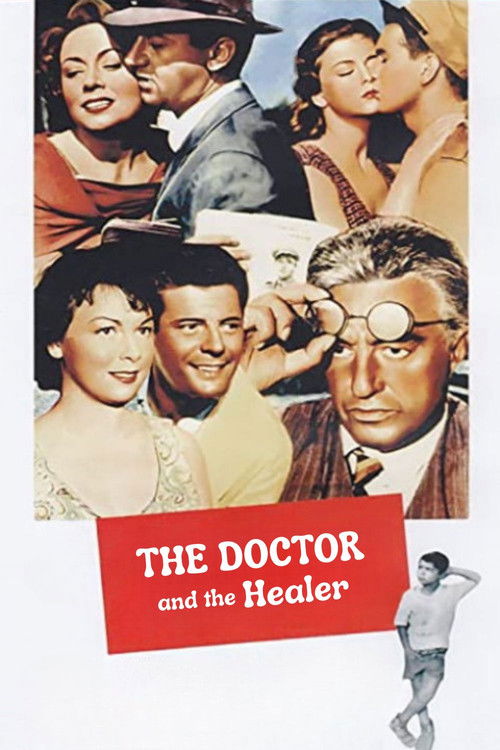
Francesco, a young doctor, is appointed doctor to the imaginary village of Pianetta in the province of Avellino, but is immediately in competition with Don Antonio, a so-called "healer".
1954
1953
1968

1980
1981

1951
1976
1961
No reviews yet. Be the first to share your thoughts on this movie!
Use the rating form above to leave a star rating and optional review.