
Bebert and the Train
1963
No user ratings available yet
Diversity score: 3.2 out of 10
1965
Director
Yves Robert
Runtime
91 minutes
Average Rating
No ratings yetSynopsis
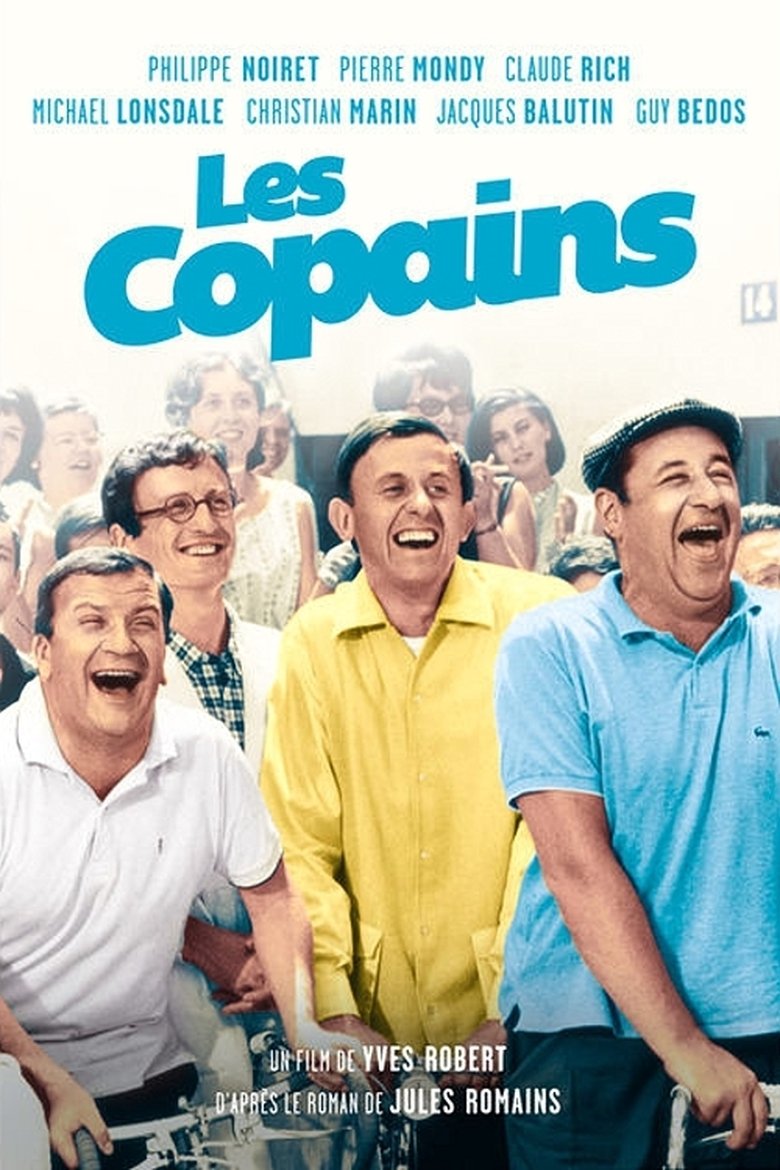
Seven old pals live inseparable lives, dividing their time between hilarious pranks and memorable drinking bouts. Bénin is the mastermind, Broudier the enforcer and Lesueur the prankster. One evening, a grandiose plan was hatched: to wreak havoc in two peaceful sub-prefectures: Ambert and Issoire. Broudier begins: in the middle of the night, disguised as a minister, he wakes up a barracks in Ambert and sets in motion a thunderous maneuver. The next day, disguised as a Dominican, Bénin climbed to the pulpit of the cathedral and delivered a sermon insulting Christian doctrine. The same day, in Issoire, the local authorities were preparing to unveil a statue of Vercingetorix. But the statue came to life, pelting the crowd with tomatoes: it was Lesueur. With their minds at rest, the friends headed off to the Côte-d'Or for a vacation. But already, one of them begins to perform a new prank.
Overall Score
Limited
Category Breakdown
LGBTQ+ Representation
The film lacks any discernible depiction of non-cisnormative identities or queer narratives. The focus remains strictly on the heteronormative social structures of mid-century rural France.
Gender Representation
The narrative is heavily centered on a male-dominated peer group. It lacks the presence of female agency or the subversion of traditional gender roles necessary to elevate the score.
Racial & Ethnic Diversity
Reflecting the historical context of 1960s rural France, the cast is ethnically homogeneous. There is no evidence of intentional casting diversity or non-white characters.
Religious & Cultural Diversity
The film earns points for its narrative focus on disrupting traditional Western institutions. Protagonists engage in irreverence toward religious and civic authority through mockery and disruption.
Disability Representation
There are no visible or invisible disabilities portrayed within the narrative. No characters have arcs defined by physical or neurodivergent experiences.
Strengths
Areas for Improvement
AI Analysis
The film functions as a pastoral comedy centered on juvenile mischief and the disruption of social order. While it uses subversion as a comedic engine, these acts are framed as play rather than systemic critique. Because the disruptions lack a structured critique of oppression and the film lacks intersectional breadth, the diversity profile remains limited. The work serves more as a study of localized social disruption than a vehicle for progressive representation.
1963
1972
1964
1961

1959

1962
1968

1964
1960
1975
1960

1971
No reviews yet. Be the first to share your thoughts on this movie!
Use the rating form above to leave a star rating and optional review.