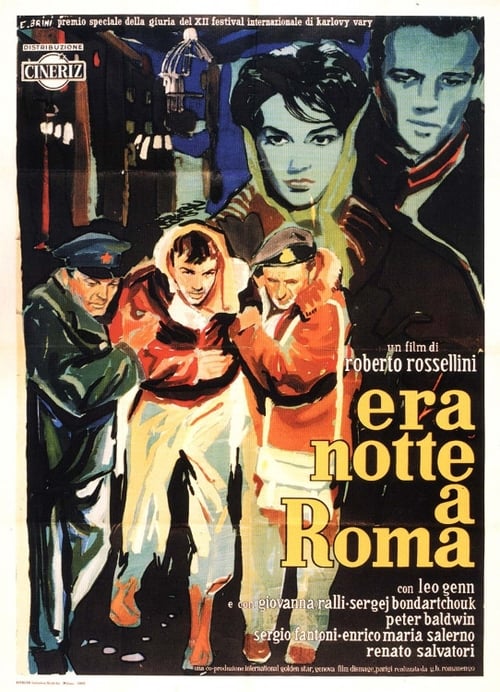
Escape by Night
1960
No user ratings available yet
Representation score: 6.1 out of 10

Representation Score
Fair
1945
Not RatedDirector
Roberto Rossellini
Runtime
104 minutes
Average Rating
No ratings yetNew Showbiz Analysis
Rossellini’s masterpiece is a foundational work of Neorealism that prioritizes systemic critique over modern identity politics. It succeeds in elevating the role of the working class and subverting authoritarian structures through its depiction of the resistance. While the film lacks LGBTQ+ representation and multi-ethnic casting, it avoids the polished artifice of high-society dramas. Instead, it finds depth in the intersection of religious and political ideologies fighting against oppression. The film's impact stems from its ability to center the struggle of the underrepresented against a monolithic state, even if its demographic scope remains historically specific to Italy.
Category Breakdown
The film focuses on traditional romantic and familial bonds. There is no presence of non-binary gender identities or same-sex relationships.
Pina emerges as a central narrative force rather than a submissive figure. Her active role in the resistance challenges the idea of women as passive observers.
The cast reflects the demographic homogeneity of 1944 Rome. However, the film centers the socioeconomic struggles of the urban working class.
The narrative blends Catholic morality with Communist resistance. This multi-layered approach critiques state authority and institutional corruption.
There are no prominent depictions of visible or invisible disabilities used as central character traits.
Present on Screen
Limited or Absent
Official Synopsis
During the Nazi occupation of 1944 Rome, Resistance leader Giorgio Manfredi is pursued by the Nazis as he seeks refuge and a means of escape.
1960

1946
1944

1960
1962

1959

1946
1944
No reviews yet. Be the first to share your thoughts on this movie!
Use the rating form above to leave a star rating and optional review.