
Dance, Fools, Dance
1931
No user ratings available yet
Representation score: 2.6 out of 10
Representation Score
Minimal
1930
NRDirector
John G. Adolfi
Runtime
60 minutes
Average Rating
No ratings yetNew Showbiz Analysis
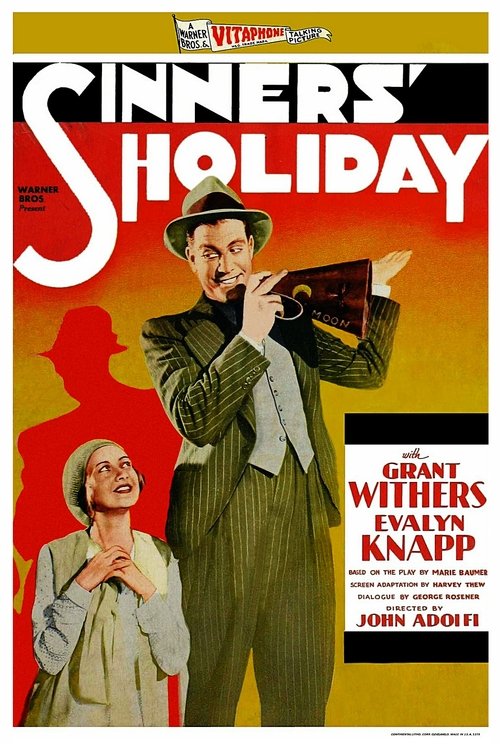
Sinners' Holiday is a product of the early 1930s studio system, prioritizing conventional crime and romance formulas. The film adheres to the established social hierarchies and moral frameworks of its time, offering very little disruption to the status quo. While Ma Delano provides a degree of influence through her role as a business owner and matriarch, she remains anchored to traditional familial expectations. The lack of diverse casting or non-normative identities reflects the era's standard production constraints. Ultimately, the film functions as a genre-driven melodrama that reinforces, rather than challenges, the period's dominant social and cultural structures.
Category Breakdown
The film does not include any non-straight or non-cisgender identities. The romantic elements follow traditional heterosexual norms typical of 1930s crime cinema.
Ma Delano serves as a central figure managing both a business and a household. However, her influence remains tied to domestic duties and family roles.
The story centers around a specific family in Coney Island. There is no indication of diverse casting or departure from the era's homogeneous demographic norms.
The narrative uses prohibition-era themes such as rum-running and accidental murder. These clichés follow standard moralistic frameworks without offering broader critiques.
There is no mention of characters dealing with physical, sensory, or neurodivergent conditions within the narrative.
Present on Screen
Limited or Absent
Official Synopsis
Ma Delano runs a penny arcade in Coney Island, living upstairs with her sons and daughter. Story involves rum-running, accidental murder and a frame-up.
1931
1933
1929

1937
1930
1933

1939

1931
No reviews yet. Be the first to share your thoughts on this movie!
Use the rating form above to leave a star rating and optional review.