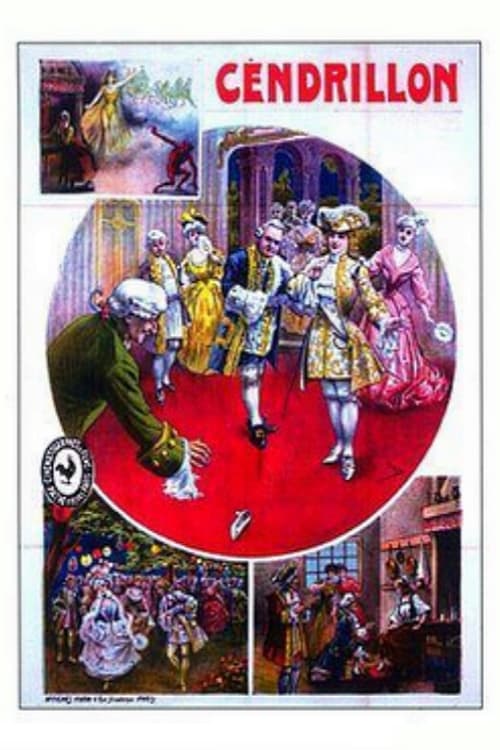
Cinderella or the Glass Slipper
1907
No user ratings available yet
Representation score: 0.3 out of 10
Representation Score
Minimal
1912
Director
Georges Méliès
Runtime
24 minutes
Average Rating
No ratings yetNew Showbiz Analysis
Méliès's 1912 adaptation primarily serves as a historical document of early cinema. While it showcases notable technical achievements such as stop-motion and transitions, the narrative remains firmly anchored in the social norms of its time. The film upholds traditional fairy tale themes without deviation, reinforcing established social hierarchies. It avoids any subversion of gender roles or cultural norms, instead validating traditional archetypes through a predictable lens. Overall, the work lacks multi-layered complexity, presenting a singular, Westernized view of morality and social mobility that sidesteps engagement with diverse identities or systemic critiques.
Category Breakdown
The film adheres closely to traditional fairy tale themes, focusing solely on a conventional romantic relationship between the main character and a royal figure.
The story emphasizes traditional gender roles by depicting a passive female protagonist whose role is defined by domestic struggles and eventual elevation through marriage.
The cast is uniform, reflecting early 20th-century European cinematic standards. There is no representation of diverse ethnic identities or race-bent casting.
The narrative operates within a conventional Western moral framework, celebrating the restoration of social order and traditional monarchical structures.
The film does not include characters with visible or invisible disabilities. The focus remains on magical transformations and socioeconomic changes.
Present on Screen
Limited or Absent
Official Synopsis
Georges Méliès's first attempt at Cinderella was in 1899. That film was extraordinary then for having multiple scenes and a semblance of a narrative; additionally, the use of dissolves as transitions in it influenced other filmmakers for years to do the same. Méliès was the cinema world's preeminent leader then. By 1912, however, that was no longer the case; frankly, as evidenced by this feature, his style had become dated. Moreover, Méliès had begun to adopt techniques from other filmmakers, such as direct cuts instead of dissolves, and there's even a match on action shot during the slipper trying-on scene.
1907
1905
1899
1904
1908
1913
1901
1923
No reviews yet. Be the first to share your thoughts on this movie!
Use the rating form above to leave a star rating and optional review.