One Hour with You
1932
No user ratings available yet
Representation score: 3.3 out of 10
Representation Score
Minimal
1937
NRDirector
Walter Lang
Runtime
84 minutes
Average Rating
No ratings yetNew Showbiz Analysis
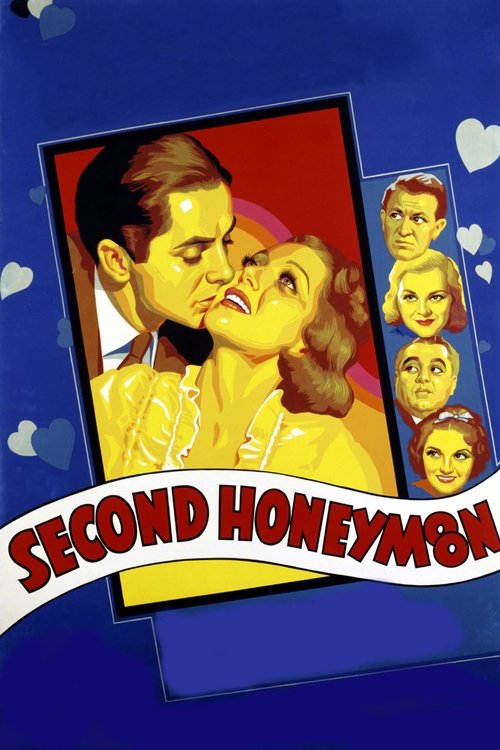
Second Honeymoon serves as a historical artifact of the 1930s studio system. It prioritizes conventional romantic comedy clichés and reinforces the era's prevailing social and gender norms rather than challenging them. The narrative structure is designed to maintain the status quo of the upper-class social order. It focuses on character-driven conflict within a rigid framework of socioeconomic homogeneity. Ultimately, the film lacks meaningful representation of diverse identities, focusing instead on traditional marital conflicts and established social hierarchies.
Category Breakdown
The film follows strict heterosexual and cisgender norms. There is no indication of queer themes or non-binary gender identities.
Vicky Benton takes control by standing up to her husband's possessiveness. However, the comedy relies on traditional male dominance and marital negotiation clichés.
The setting reflects a homogeneous, predominantly white, Anglo-Saxon demographic. There is no significant evidence of racial diversity or varied ethnic perspectives.
The story reinforces Western social structures and the sanctity of the nuclear family. It emphasizes a moral framework based on class-based respectability.
No characters are defined by physical or neurodivergent conditions. There are no visible or invisible disabilities portrayed within the narrative.
Present on Screen
Limited or Absent
Official Synopsis
Raoul McLish stops over in Miami Beach where he runs into his ex-wife, Vicky Benton, and her new husband Bob, a belt manufacturer. At first Bob enjoys Raoul's presence - in part because Vicky is his not Raoul's and in part because Raoul is a lot of fun. The fun wears thin for Bob as his seriousness and possessiveness take over. When Bob leaves for a few days to settle a labor dispute at his factory, Vicky and Raoul spend time together, Winchell's column implies untoward behavior, Bob barks at Vicky, and that gets her back up. Can things be sorted out? Help comes from Raoul's upright valet, McTavish, and a principled cigarette girl, Joy, whom Raoul picks up.
1932
1948

1933
1934

1931
1937
1941
1938
No reviews yet. Be the first to share your thoughts on this movie!
Use the rating form above to leave a star rating and optional review.