My Name Is Salt
2013
No user ratings available yet
Diversity score: 6.2 out of 10
1959
Not RatedDirector
Margot Benacerraf
Runtime
90 minutes
Average Rating
No ratings yetSynopsis
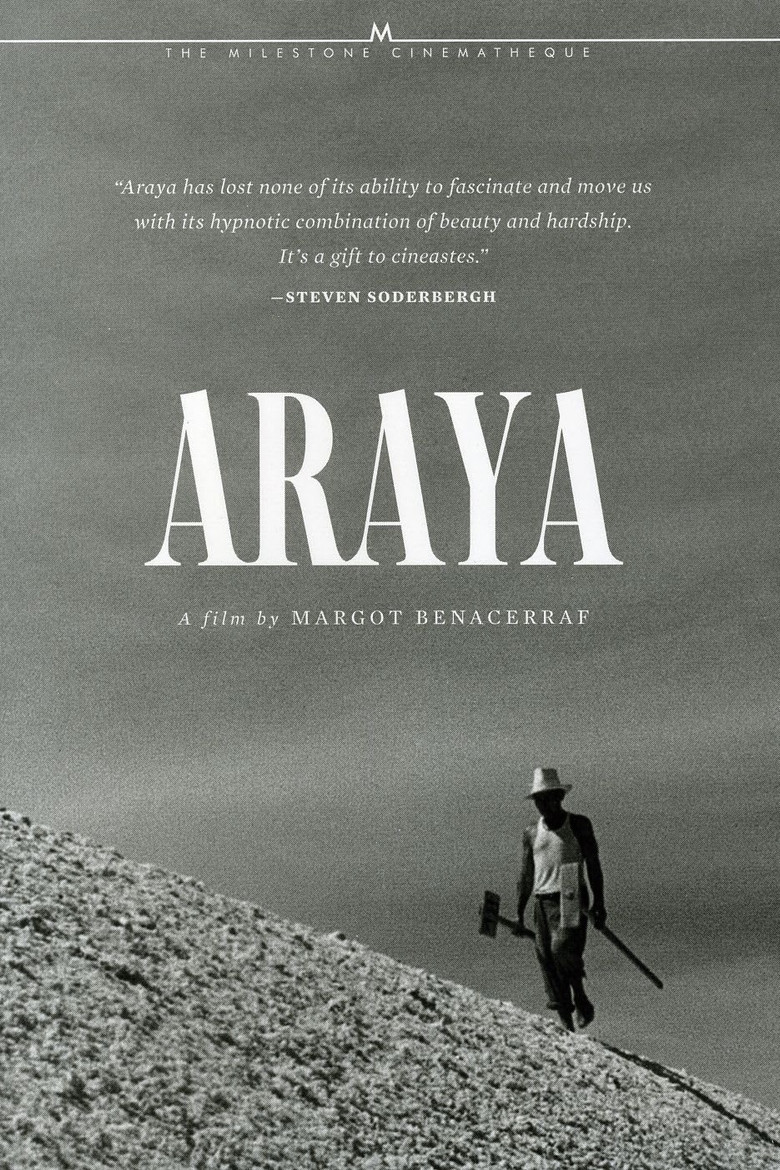
"Araya" is an old natural salt mine located in a peninsula in northeastern Venezuela which was still, by 1959, being exploited manually five hundred years after its discovery by the Spanish. In images, the life of the "salineros" and their archaic methods of work before their definite disappearance with the arrival of the industrial exploitation.
Overall Score
Good
Category Breakdown
LGBTQ+ Representation
The film focuses on the communal and cyclical rhythms of a salt-mining community. There is no documented presence of LGBTQ+ characters or narratives exploring non-heteronormative identities.
Gender Representation
Women are depicted with dignity within domestic and communal spheres. However, primary agency regarding physical labor and the community's economic engine is centered on male workers.
Racial & Ethnic Diversity
The film provides high agency to a marginalized labor class by centering a non-Western Venezuelan community. Using actual workers ensures an authentic, non-Westernized depiction of indigenous labor.
Religious & Cultural Diversity
The narrative emphasizes a spiritual and ritualistic connection to the land. This prioritizes a non-Western worldview and critiques industrial capitalism through a subsistence-based, communal lens.
Disability Representation
There are no specific depictions of characters with visible or invisible disabilities used as central plot devices.
Strengths
Areas for Improvement
AI Analysis
Araya is a poetic documentary that succeeds primarily through its disruption of the Western ethnographic gaze. By centering the manual labor of Venezuelan salineros, the film reclaims a localized identity that exists independently of colonial frameworks. The work excels in racial and cultural representation, offering a profound look at a non-Western worldview and the tension between communal tradition and industrial expansion. It functions as a powerful reclamation of indigenous agency. However, the film remains bound by the traditional social hierarchies of its era. It lacks representation of LGBTQ+ identities and maintains a gendered division of labor where physical agency is largely reserved for men.
2013

2007

2018
2011

2008

1959

2019
1964
1930
1929
1999
2017
No reviews yet. Be the first to share your thoughts on this movie!
Use the rating form above to leave a star rating and optional review.