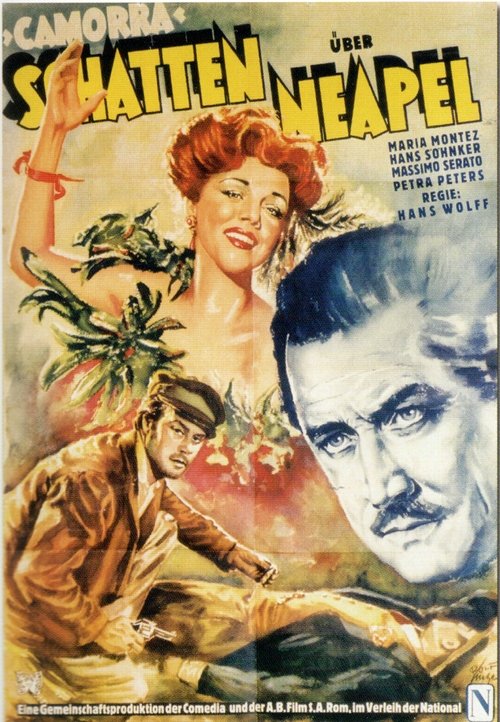
Das Geheimnis des Hohen Falken
1950
No user ratings available yet
Representation score: 0.5 out of 10
Representation Score
Minimal
1951
16Director
Hans Wolff
Runtime
86 minutes
Average Rating
No ratings yetNew Showbiz Analysis
Shadows Over Naples reflects the representational norms of 1950s European crime cinema. While the international co-production introduces some cultural variety through its Mediterranean setting, the film remains rooted in traditional narrative structures. The presence of Maria Montez highlights a significant female role, but the genre's conventions often confine such characters to traditional archetypes. Without evidence of characters taking control or challenging systemic norms, the film adheres to conventional social hierarchies and moral frameworks. The film's adherence to homogeneous ethnic portrayals and established moral frameworks limits its progressive representation.
Category Breakdown
The film does not include any characters with LGBTQ+ identities or critiques of heterosexuality. It also lacks any themes related to queer experiences.
Maria Montez plays a central role through her glamorous persona. However, the film seems to rely on traditional gender roles like the femme fatale archetype without challenging these norms.
As an Italian-German co-production, the film features Mediterranean actors. Although this provides some cultural variety, the film appears to maintain homogeneous ethnic portrayals typical of the era.
The narrative likely upholds conventional morality and social structures. There is no indication of challenging Western institutions or promoting moral relativism.
The film does not depict any characters with physical disabilities or neurodivergent conditions.
Present on Screen
Limited or Absent
Official Synopsis
An Italian-German crime film. One of Maria Montez's last films.
1950
1937
1957

1949
1953
1952
1951
1966
No reviews yet. Be the first to share your thoughts on this movie!
Use the rating form above to leave a star rating and optional review.