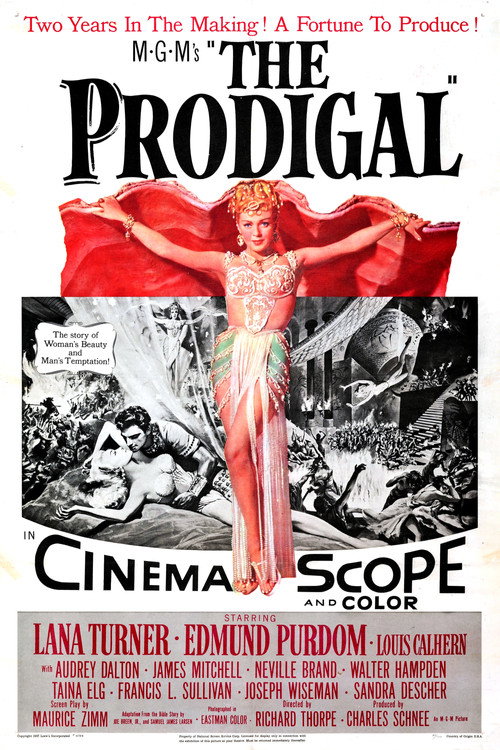
The Prodigal
1955
No user ratings available yet
Representation score: 0.3 out of 10
Representation Score
Minimal
1963
Director
Pierre Gaspard-Huit
Runtime
124 minutes
Average Rating
No ratings yetNew Showbiz Analysis
Scheherazade is portrayed as a powerful intellectual figure who uses her wit to navigate and challenge the Sultan's absolute authority. However, the film's casting choices prioritize Western star power over ethnic authenticity, reinforcing a colonialist aesthetic. Despite this, the narrative effectively subverts the 'passive victim' stereotype by positioning Scheherazade as the primary driver of the plot.
Category Breakdown
The film strictly follows conventional assumptions about straight relationships, offering no hints of LGBTQ+ themes or experiences.
Scheherazade is the main intellectual force, using her storytelling skills to navigate a patriarchal world. She challenges the 'passive victim' stereotype but the story's resolution still aligns with traditional gender roles.
The film casts European actors in roles traditionally associated with Middle Eastern characters, creating an exoticized and disconnected aesthetic.
The narrative presents a mythological tale that questions absolute authority through cleverness and wit, avoiding rigid moralism.
There are no significant representations of physical or cognitive disabilities among the characters, who occupy high-status mythological roles.
Present on Screen
Limited or Absent
Official Synopsis
Sheherazade is promised to a powerful Sultan as a gift in exchange for free passage to the Holy Land. When the Sultan's underling saves her from certain death, she falls madly in love with her hero.
1955
1959
2016

1959
1966
1940

1953
1924
No reviews yet. Be the first to share your thoughts on this movie!
Use the rating form above to leave a star rating and optional review.