Dark Eyes
1987
No user ratings available yet
Representation score: 1.2 out of 10
Representation Score
Minimal
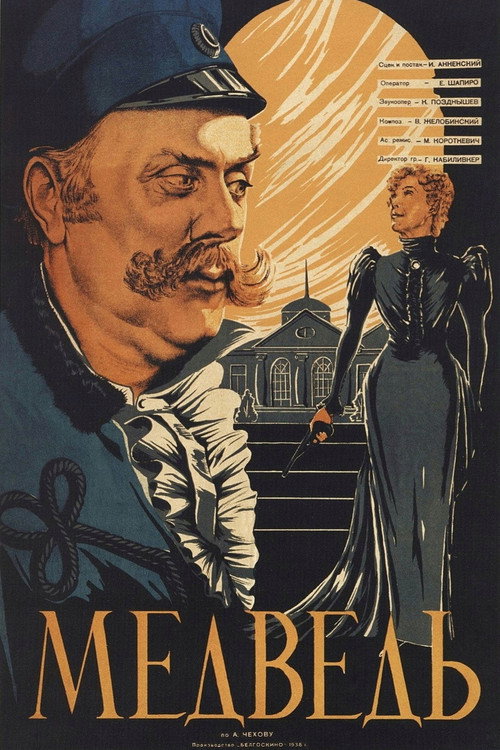
1938
Director
Isidor Annensky
Runtime
43 minutes
Average Rating
No ratings yetNew Showbiz Analysis
The Bear serves as a period-specific character study that excels in challenging traditional gender power dynamics. Popova’s assertive and combative nature offers a refreshing contrast to the submissive female archetypes common in romantic dramas of this era. However, the film lacks complexity in representing multiple aspects of identity. It remains anchored in traditional romantic and class-based structures, offering limited demographic breadth or representation of diverse identities. Ultimately, while the film provides interesting psychological depth through its Chekhovian roots, it does not advance toward a more inclusive narrative structure.
Category Breakdown
The film does not include any LGBTQ+ narratives or non-cisgender identities. The plot revolves around a traditional romantic tension between a male creditor and a female widow.
Popova challenges the passive female stereotype by playing a significant role in driving the story. Her emotional volatility and decision to engage in a pistol duel with a man defy traditional gender roles.
The production seems culturally uniform, reflecting its specific time and place. There is no evidence of diverse ethnic casting or non-white representation in the story.
The story is grounded in the social structures of the 19th-century landed class. Through the character of Luka, the film explores class dynamics, providing a period-specific character study.
There are no visible or invisible disabilities portrayed that affect the narrative arc of the film.
Present on Screen
Limited or Absent
Official Synopsis
Young man comes to collect a debt owed to him by the widow Popova's late husband. They argue, duel with pistols and fall in love while all of this is witnessed by Popova's servant Luka.
1987
1984
1985
1939
1938

1928
1980
1938
No reviews yet. Be the first to share your thoughts on this movie!
Use the rating form above to leave a star rating and optional review.