
Chances
1931
No user ratings available yet
Diversity score: 2.8 out of 10
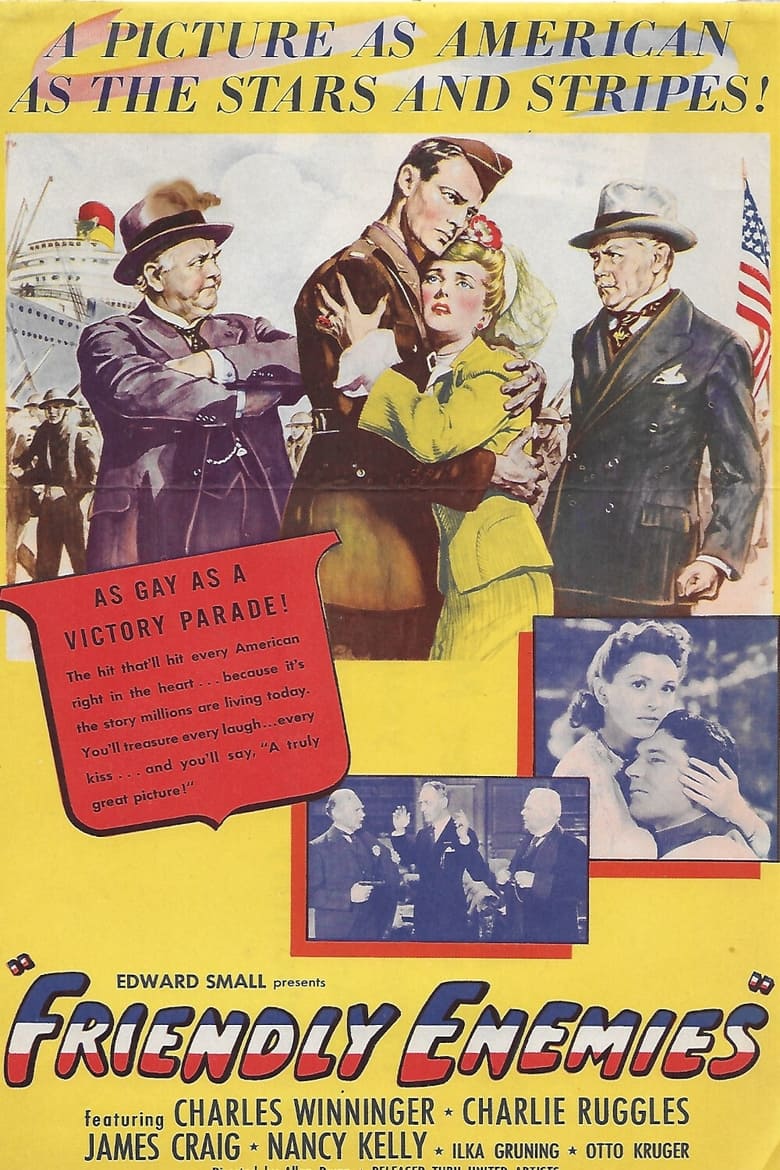
1942
NRDirector
Allan Dwan
Runtime
95 minutes
Average Rating
No ratings yetSynopsis
During World War I, two German men friends who emigrated to the US and become millionaires agree on most things, with one major difference: one has taken the US side against Germany regarding the war, while the other stays stubbornly loyal to "the old country". His stubbornness results in tragedy for his old friend and a lesson in the consequences of blind loyalty.
Overall Score
Limited
Category Breakdown
LGBTQ+ Representation
The film lacks any evidence of queer narratives or non-cisnormative identities. The central male friendship is framed through traditional fraternal loyalty rather than any disruption of heteronormativity.
Gender Representation
The narrative architecture centers on masculine dynamics of patriotism and business. There is little evidence of female agency or the subversion of traditional gender hierarchies.
Racial & Ethnic Diversity
The story explores the immigrant experience through German-American characters. However, the focus remains on a specific European subgroup within the racial paradigms of the early 1940s.
Religious & Cultural Diversity
The film serves as a cautionary tale about nationalism. It reinforces the necessity of aligning with the prevailing social order rather than critiquing Western institutions.
Disability Representation
There is no information suggesting that disability or neurodivergence plays a role in the character arcs or plot mechanics.
Strengths
Areas for Improvement
AI Analysis
Friendly Enemies is a product of its era, functioning as a conventional wartime drama that reinforces established social and nationalistic hierarchies. The narrative focuses heavily on the tensions of assimilation and the complexities of dual loyalty during World War I. While the film provides some exploration of the immigrant experience through its German-American protagonists, it lacks intersectional complexity. The storytelling adheres to the traditional structures of the Golden Age of Hollywood, prioritizing patriotic sentimentality over the deconstruction of systemic hierarchies. Ultimately, the film operates within the limited social frameworks of 1942. It lacks representation of diverse identities and focuses instead on a specific European immigrant subgroup and masculine-driven conflict.
1931
1930
1930
1932
1983
1931
1934
1927
1943
1937
1946
1942
No reviews yet. Be the first to share your thoughts on this movie!
Use the rating form above to leave a star rating and optional review.