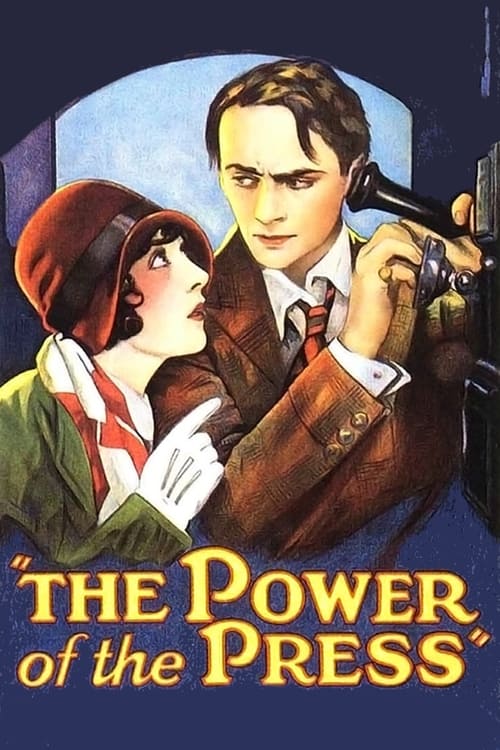
The Power of the Press
1928
No user ratings available yet
Diversity score: 1.9 out of 10

1943
NRDirector
Lew Landers
Runtime
64 minutes
Average Rating
No ratings yetSynopsis
During WWII, the publisher of the isolationist New York Gazette is murdered just as he was about to change the paper's policy and support the US war effort. His friend, a small town patriotic editor, is brought in to find the culprits.
Overall Score
Limited
Category Breakdown
LGBTQ+ Representation
The film lacks any evidence of LGBTQ+ characters or non-heteronormative narratives. It operates within the strict social constraints of the 1943 Hays Code era.
Gender Representation
The narrative centers on male protagonists, specifically a patriotic editor and a murdered publisher. Women appear to be relegated to traditional supporting roles or domestic archetypes.
Racial & Ethnic Diversity
The story focuses on domestic news agencies and wartime patriotism. It likely reflects the homogeneous casting norms of the 1940s, prioritizing Anglo-Saxon perspectives.
Religious & Cultural Diversity
The plot reinforces Western institutional values and the importance of the press. It aligns with the era's emphasis on national unity and supporting the war effort.
Disability Representation
There is no indication of characters with visible or invisible disabilities. The narrative does not address disability representation.
Strengths
Areas for Improvement
AI Analysis
Power of the Press is a conventional wartime drama that prioritizes nationalistic interests over social exploration. The story follows a male editor navigating the transition from isolationism to wartime patriotism, a structure that reinforces traditional masculine agency. The film adheres to the homogeneous social standards of the early 1940s. It lacks intersectional depth, focusing instead on the role of the press as a pillar of the state during a global conflict. Because the film functions as a product of the studio system's wartime alignment, it does not seek to disrupt social hierarchies or present diverse identities.
1928
1941
1947
1939
1939
1942
1940
1959
1942

1972

1942
1951
No reviews yet. Be the first to share your thoughts on this movie!
Use the rating form above to leave a star rating and optional review.