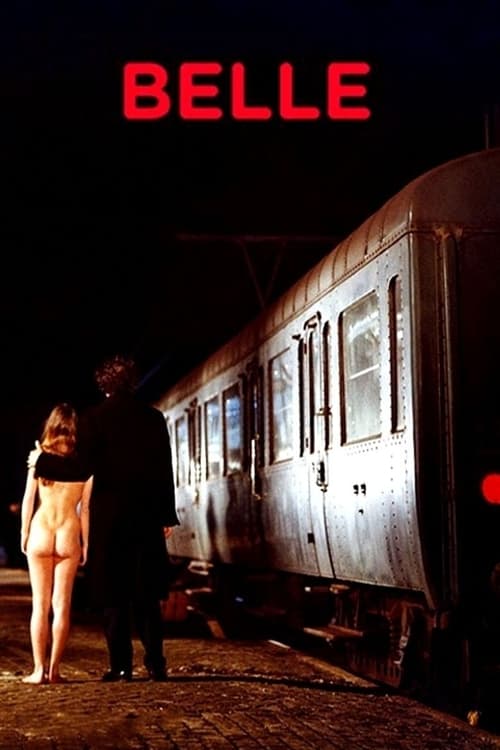
Belle
1973
No user ratings available yet
Representation score: 4.7 out of 10

Representation Score
Fair
1966
Director
André Delvaux
Runtime
95 minutes
Average Rating
No ratings yetNew Showbiz Analysis
André Delvaux’s drama is a sophisticated study of psychological fragmentation and subjective reality. It prioritizes internal truth over linear, objective storytelling, offering a postmodern critique of the stable Western subject. While the film excels in exploring mental instability and moral relativism, it remains limited by the social homogeneity of its era. The narrative is heavily anchored in the male gaze and traditional power dynamics. Ultimately, the work is a character-driven exploration of a fracturing mind, though it lacks significant visibility regarding racial or LGBTQ+ identities.
Category Breakdown
The film explores an unrequited attraction between a male teacher and a female student, focusing on the protagonist's internal struggle rather than explicit LGBTQ+ identities.
The narrative centers on a male authority figure and his subjective experience of a female subject. The female character primarily serves as a catalyst for the protagonist's journey rather than as an independent agent.
Set in a small Flemish town, the film reflects the homogeneous social landscape of 1966. There is no evidence of racial diversity or non-white casts within the story.
The film embraces moral relativism by framing the climax as a potential figment of a disturbed mind, challenging traditional Western preferences for objective, moralistic resolutions.
The protagonist's deteriorating mental health following a traumatic autopsy serves as the central lens for the film. The narrative provides psychological depth to his mental instability.
Present on Screen
Limited or Absent
Official Synopsis
Govert Miereveld is a lawyer from a small Flemish town who also teaches in a school for girls. He harbors a secret love for one of his young students, Fran, whom he loses touch with after her graduation. Some time later, Miereveld has to attend an autopsy, and the shock of the experience deeply affects his mental balance. He finds out - or he believes so - that Fran has become a popular singer. He arranges to meet her to finally reveal his feelings. An ambiguous but perhaps tragic denouement follows which might be a figment of the protagonist's disturbed mind.
1973

1984

1995

1963

1967
1951
1981
1967
No reviews yet. Be the first to share your thoughts on this movie!
Use the rating form above to leave a star rating and optional review.