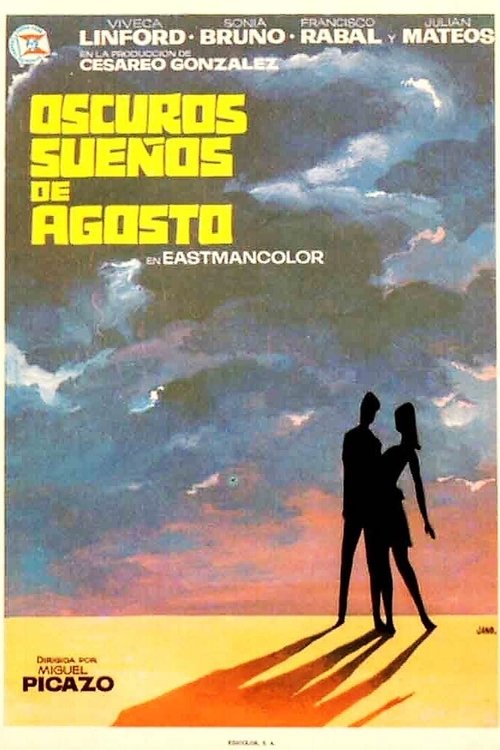
Oscuros sueños de agosto
1967
No user ratings available yet
Representation score: 5.5 out of 10

Representation Score
Good
1965
NRDirector
Juan Antonio Bardem
Runtime
94 minutes
Average Rating
No ratings yetNew Showbiz Analysis
Juan Antonio Bardem’s drama serves as a mid-century character study that challenges traditional social hierarchies. The film excels in dismantling conventional ideas of masculine competence and domestic stability through its main characters. While the narrative offers psychological depth and moral complexity, it remains limited by a lack of racial and LGBTQ+ representation. The focus primarily centers on a European demographic and traditional romantic structures. Ultimately, the film succeeds as a critique of societal norms, even if it does not offer broad representation across all identity categories.
Category Breakdown
The film examines changing romantic bonds and the disruption of traditional home life. However, it doesn't explicitly show queer identities within the main love triangle.
Jenny plays a key role in driving the story through her romantic choices. Pascal presents a vulnerable, unconventional version of masculinity that avoids typical heroic roles.
The story is set in a Costa Brava seaside village with a predominantly white cast. There is no indication of significant racial diversity or a non-white majority.
The narrative focuses on personal emotional truths rather than religious ideals, emphasizing moral relativism. It criticizes idealized intellectuals and questions the sanctity of the traditional family.
Vincent's journey highlights psychological vulnerability through a nervous breakdown, but it's unclear if this portrayal avoids common stereotypes about mental health.
Present on Screen
Limited or Absent
Official Synopsis
Vincent is recovering from a nervous breakdown in a seaside village on the Costa Brava. He enters into an affair with nightclub owner Jenny, but their relationship changes when she falls for alcoholic author Pascal Regnier, who is struggling to resume his writing career. Vincent eventually returns home, leaving Jenny to stay on with Pascal and his young son Daniel.
1967

1963
1984
1963
1992
1984

1959

1958
No reviews yet. Be the first to share your thoughts on this movie!
Use the rating form above to leave a star rating and optional review.