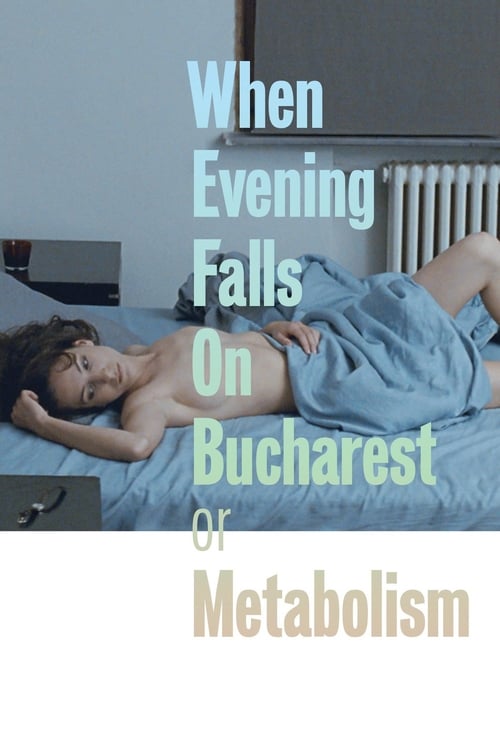
When Evening Falls on Bucharest or Metabolism
2013
No user ratings available yet
Representation score: 6.8 out of 10

Representation Score
Good
2006
Director
Marco Bellocchio
Runtime
97 minutes
Average Rating
No ratings yetNew Showbiz Analysis
The film serves as a psychological study of the tension between personal desires and the rigid structures of aristocratic and religious traditions. It uses melodrama to question institutional power and bourgeois morality. While the work lacks broad demographic diversity, it excels at intellectual subversion. It replaces the stability of family or state with moral relativism and psychological complexity. The narrative structure is designed to destabilize certainty, focusing on the corruptive influence of class and the psychological burden of societal expectations.
Category Breakdown
The film examines unconventional attractions and blurs reality to challenge traditional romantic expectations. Though it doesn't explicitly confirm queer identities, the protagonist’s actions disrupt conventional romantic norms.
The narrative overturns traditional gender roles by pitting strong patriarchal figures against the empowered female lead. It emphasizes personal autonomy rather than using women as tools in financial deals.
The story focuses on Rome and Southern Italy, emphasizing aristocratic social strata over racial diversity. It prioritizes class and lineage within its specific Italian context.
The film critiques traditional Western institutions by showing the aristocracy and pious melodrama as mechanisms of financial convenience. It favors subjective moral experiences over rigid social and religious norms.
The plot centers on a protagonist experiencing fragmented perceptions and questioning his sanity. This approach uses mental instability to explore the individual’s breakdown against a rigid system.
Present on Screen
Limited or Absent
Official Synopsis
Franco Elica is a film director casting a remake of a pious melodrama in Rome. He's melancholy, heading south for a break. On a beach, he meets a man who films weddings and is roped into helping film the wedding of the daughter of a severe and imperious prince. The wedding is one of convenience - the prince needs money, the groom is a mama's boy. Elica is attracted to the bride, Boda, and tries to convince her not to marry. No matter how outrageous his behavior, the prince keeps Elica on as the wedding director. As the wedding approaches, what's real blurs with Elica's imagination. Is he mad?
2013

1995

1984
1964
2013
2023
2016
2009
No reviews yet. Be the first to share your thoughts on this movie!
Use the rating form above to leave a star rating and optional review.