
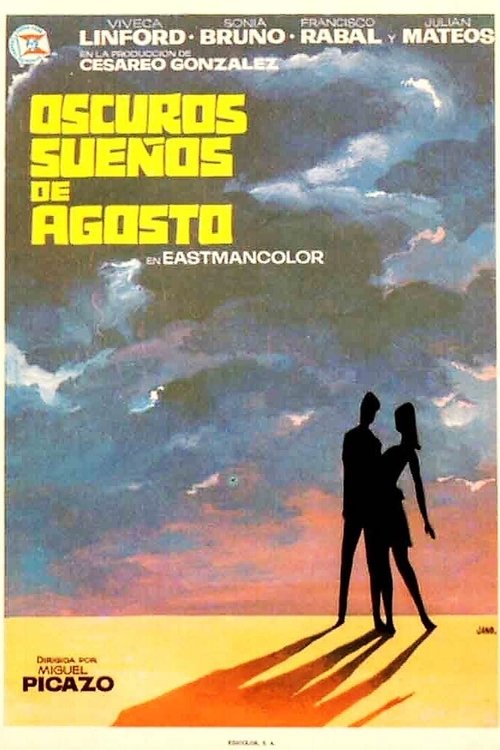
The Rats
1963
No user ratings available yet
Representation score: 4.6 out of 10
Representation Score
Fair
1967
Director
Miguel Picazo
Runtime
105 minutes
Average Rating
No ratings yetNew Showbiz Analysis
Miguel Picazo’s drama explores psychological realism through the lens of fractured familial dynamics. The film centers on the emotional conflicts of women and the instability of the traditional family unit in 1967 Spain. While the film offers depth regarding mental health and women's ability to drive the story, it remains constrained by the era's social frameworks. The narrative lacks broad diversity and presents a largely homogeneous social landscape. Ultimately, the film functions as a character study of neurosis and desire, prioritizing psychological tension over systemic critique or diverse representation.
Category Breakdown
The story focuses on romantic attraction between Ana and Mario, which aligns with the assumption that everyone is straight. There is no exploration of gender identities beyond traditional roles or critiques of societal norms.
Ana plays a central role in driving the story, navigating her own desires and connections. The film emphasizes her psychological depth rather than portraying her as submissive or solely domestic.
The setting appears to be a homogeneous Spanish social environment. The narrative lacks evidence of multi-ethnic casting or challenging Eurocentric norms.
The plot deconstructs the traditional Spanish family through themes of neurosis and estrangement. However, it does not explicitly address anti-institutional or anti-capitalist themes.
Mental health is a central theme, featuring characters dealing with neurosis and instability. It remains unclear if these characters have full control over their actions or serve primarily as plot devices.
Present on Screen
Limited or Absent
Official Synopsis
Isabel returns to Spain, after several years of absence, to be cured of a neurosis. His daughter Ana, whom he has not seen in all this time, decides to spend the holidays with her, taking advantage of the fact that her boyfriend has gone to study in Germany. During her stay in the sanatorium, Ana meets Mario, an attractive young man somewhat unbalanced, who tries to seduce her. Although at first she does not show any interest, little by little she becomes attracted to him.
1963
1962

1979
1961
1969
1987
1977

1980
No reviews yet. Be the first to share your thoughts on this movie!
Use the rating form above to leave a star rating and optional review.