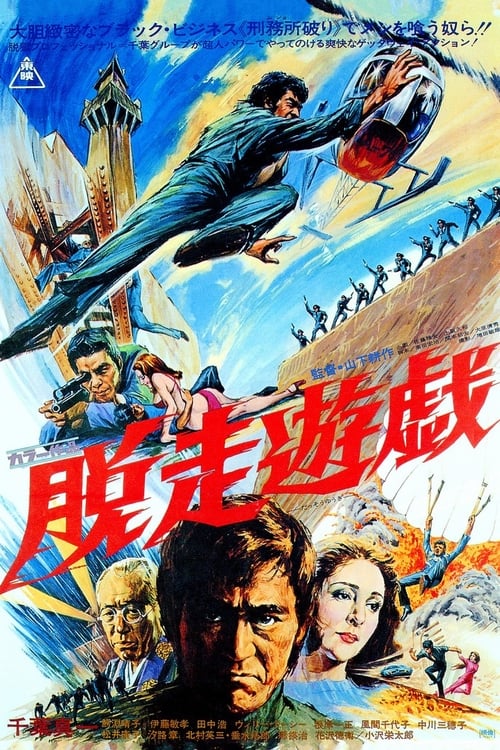
Jail Breakers
1976
No user ratings available yet
Representation score: 2.9 out of 10
Representation Score
Limited
1973
Director
Ryuichi Takamori
Runtime
89 minutes
Average Rating
No ratings yetNew Showbiz Analysis
Bodyguard Kiba 2 is a standard genre entry that adheres to the conventional action-crime clichés of its era. The narrative focuses on a protagonist's reintegration into society after prison, prioritizing individual survival over broader social critique. The film lacks documentation of diverse identities. It follows traditional masculine characters and domestic industry standards of 1970s Japanese cinema, offering little disruption of established social hierarchies.
Category Breakdown
The film does not include explicit representations of non-straight identities. The story focuses on a crime-action framework without addressing assumptions about everyone being straight.
The story centers on masculine characters typical of 1970s action cinema. It emphasizes male control over the story within a violent setting rather than challenging gender roles.
As a 1973 Japanese production, the cast is likely predominantly Japanese. There is no information about non-Japanese characters or race-bent casting.
The plot explores survival within gang-dominated social structures. It does not prioritize secular themes or offer a critique of traditional institutions.
There is no mention of characters with visible or invisible disabilities. The narrative does not address neurodivergence or physical impairments.
Present on Screen
Limited or Absent
Official Synopsis
Kiba is back again, but this time he has fallen from grace and sent to prison for all the violent acts he has committed. Once he's out, he begins working as a bodyguard in a club that is crawling with gangsters.
1976
1966

1968

1967
1963
1974
1961

1968
No reviews yet. Be the first to share your thoughts on this movie!
Use the rating form above to leave a star rating and optional review.