You are here:
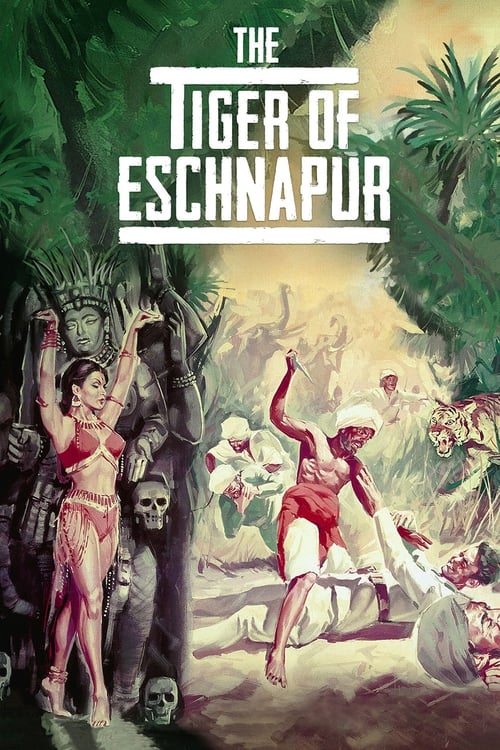
The Tiger of Eschnapur

The Tiger of Eschnapur

1959

Director

Fritz Lang

Runtime

101 minutes

Average Rating

No ratings yet

Synopsis

In Eschnapur, a German architect saves the life of the Maharajah's favorite temple dancer and becomes Maharajah's friend but their friendship is tested when the architect and the dancer fall in-love, triggering the Maharajah's vengeful ire.

Where to Watch

Diversity & Representation

Overall Score

2.9/10

Limited


Category Breakdown

LGBTQ+ Representation

Minimal

The film lacks LGBTQ+ characters or non-heteronormative identities. Romantic tension is confined to a traditional heterosexual triad involving the architect, the dancer, and the Maharajah.

Gender Representation

Limited

Female agency is largely reactive to the desires of male protagonists. While the dancer is central to the plot, men drive the political and physical action.

Racial & Ethnic Diversity

Fair

The film employs an Orientalist aesthetic that filters the Indian setting through a European tourist gaze. The narrative centers the Western protagonist's experience rather than local perspectives.

Religious & Cultural Diversity

Limited

Traditional institutions like monarchy and temple structures are presented as stable pillars. The film follows conventional adventure-drama morality without critiquing Western or religious systems.

Disability Representation

Minimal

There are no prominent depictions of visible or invisible disabilities that drive the narrative or provide character depth.

Strengths

  • Features a central female lead who serves as a primary catalyst for the film's plot and romantic tension.

Areas for Improvement

  • The narrative relies on Orientalist tropes and a Western-centric 'tourist gaze' regarding its Indian setting.
  • Female characters lack independent agency, functioning primarily as objects of romantic or political contention.
  • The film lacks representation of LGBTQ+ identities or diverse perspectives on gender and disability.

AI Analysis

The film functions as a classic mid-century adventure drama that reinforces the social hierarchies of 1959. It relies heavily on the 'exotic East' trope, centering a European architect's journey within an Indian setting. Gender roles are strictly traditional, with female characters serving as objects of contention rather than active drivers of the plot. The narrative architecture prioritizes male political and romantic agency. Ultimately, the work lacks the intersectional depth required to disrupt colonial-era tropes, opting instead for a Western-centric perspective that maintains the status quo of its era.

How are these scores produced? →

Rate this Movie

No rating selected
Use arrow keys to select a rating from 1 to 5 stars
Optional text review, maximum 2000 characters
Tip: Wrap spoilers with ||double pipes|| to hide them
0/2000 characters
You must be signed in to submit a rating

Reviews

No reviews yet. Be the first to share your thoughts on this movie!

Use the rating form above to leave a star rating and optional review.