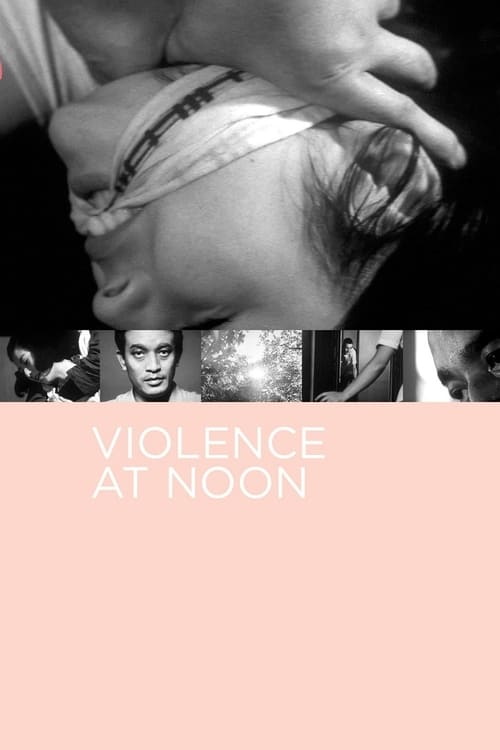
Violence at Noon
1966
No user ratings available yet
Representation score: 3.2 out of 10

Representation Score
Fair
1968
Director
Masao Adachi
Runtime
72 minutes
Average Rating
No ratings yetNew Showbiz Analysis
Masao Adachi’s *Sex Zone* operates as a formalist experiment that rejects the traditional spectacle of horror. By adopting a monotone, conceptual documentary style, the film upends expectations of catharsis and instead presents a detached observation of a violent event. The work successfully challenges mainstream cinematic hierarchies. It avoids the 'damsel in distress' cliché by examining the Geisha's death through a lens of systemic critique rather than visual exploitation. However, the film's scope remains limited. While it critiques social structures, it lacks specific data on multi-layered identities or diverse character representation.
Category Breakdown
The film doesn't provide clear examples of LGBTQ+ characters or arcs. However, its connection to the Japanese New Wave suggests a possible critique of societal norms that assume everyone is straight.
The story focuses on a Geisha, treating her murder as a sociological study. This approach avoids typical clichés that reduce women to mere objects of consumption.
As part of the Japanese New Wave, the film centers on non-Western perspectives. It highlights Japanese bathhouse culture, providing a localized, non-Anglo-centric viewpoint.
The film challenges traditional institutions using a conceptual documentary style. It emphasizes systemic realities over moralistic storytelling to critique the social environment around the crime.
There is no information about the portrayal of physical or neurodivergent disabilities in the narrative.
Present on Screen
Limited or Absent
Official Synopsis
Inspired by the true story of a Geisha murdered in a city famous for its baths, Adachi forged here his favorite style, a kind of conceptual documentary recounting the incident in monotone. The same event that at the beginning of Violated Angels escaped every principle of causality, is portrayed here as a singular anti-spectacle.
1966

1978

1969
1969
1968
1967
1998
1963
No reviews yet. Be the first to share your thoughts on this movie!
Use the rating form above to leave a star rating and optional review.