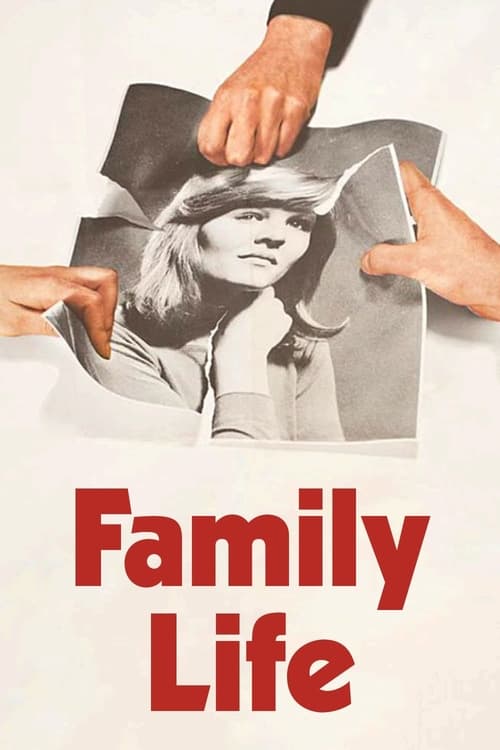
Family Life
1971
No user ratings available yet
Diversity score: 4.3 out of 10

1981
Director
Ken Loach
Runtime
104 minutes
Average Rating
No ratings yetSynopsis
Thatcherism and the Irish troubles provide the backdrop for this study of Mick, a well-meaning youth in Sheffield, who has, unlike Dickens' Pip, no expectations. Mick lives with his parents, works on his motorbike, looks for work, and every two weeks gets his check from the dole. There are no jobs. His best mate Alan joins the army to fix tanks and is sent to Belfast to quell Catholics. At a disco, Mick meets Karen, who works at a shoe shop and lives with her recently-separated mom. Karen misses her dad. She offers Mick emotional stability and a route to adulthood; Alan pitches the army. Does Mick have a future?
Overall Score
Fair
Category Breakdown
LGBTQ+ Representation
The film focuses on heteronormative struggles within the Sheffield working class. There is a notable absence of queer narratives or non-cisnormative identities, as interpersonal dynamics center on traditional romantic pairings.
Gender Representation
Women are depicted with agency rather than as decorative figures. Karen serves as a vital source of emotional stability, while the film subverts masculine tropes by highlighting male impotence in a collapsing economy.
Racial & Ethnic Diversity
The cast is predominantly white, reflecting the film's hyper-localized focus on Northern England. While the Irish troubles provide a backdrop of ethnic tension, the central character studies lack racial diversity.
Religious & Cultural Diversity
The film excels in its critique of Thatcherism and capitalist structures. It portrays state bureaucracy and unemployment systems as dehumanizing, framing social unrest as a logical response to systemic failure.
Disability Representation
There is little explicit focus on physical or neurodivergent disabilities. Instead, the film explores a systemic 'disability'—the economic incapacity of a community rendered obsolete by shifting political tides.
Strengths
Areas for Improvement
AI Analysis
Ken Loach utilizes social realism to craft a profound critique of institutional power. The film's strength lies in its sophisticated deconstruction of the capitalist structures and the dehumanizing nature of the 1980s unemployment system. However, the narrative is limited by its narrow demographic focus. The absence of LGBTQ+ identities and racial diversity within the central Sheffield setting results in a more homogenous social microcosm. Ultimately, the film prioritizes class-based struggle over individual identity diversity. It succeeds as a systemic critique of Western economic hierarchies, even while remaining socially narrow in its character representation.
1971
1967

1994

2004
1949

1976

1959
1965

1981
1966

1997

1973
No reviews yet. Be the first to share your thoughts on this movie!
Use the rating form above to leave a star rating and optional review.