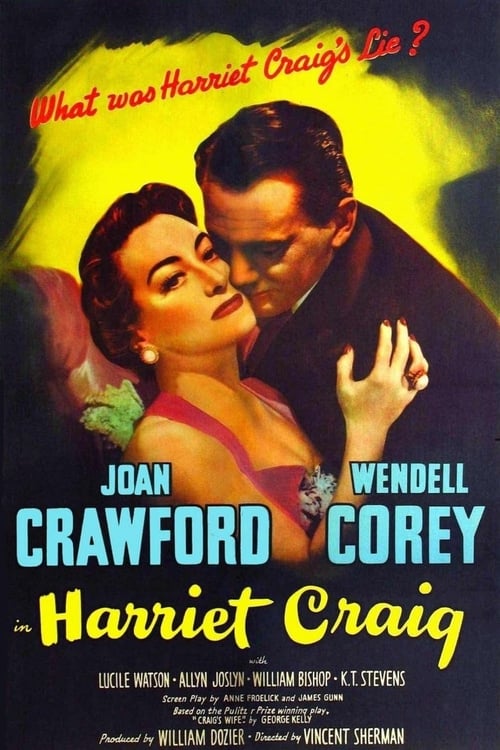
Harriet Craig
1950
No user ratings available yet
Diversity score: 4.5 out of 10

1956
ApprovedDirector
Daniel Taradash
Runtime
85 minutes
Average Rating
No ratings yetSynopsis
Politicians go after a small-town librarian when she refuses to ban a book. She's quickly labeled a Communist.
Overall Score
Limited
Category Breakdown
LGBTQ+ Representation
The film lacks LGBTQ+ characters or explorations of non-cisnormative identities. The social landscape remains strictly within the heteronormative parameters of the 1950s.
Gender Representation
Bette Davis's role as a Judge disrupts mid-century hierarchies by placing a woman in a position of legal authority. The protagonist's agency drives the plot against a male-dominated social order.
Racial & Ethnic Diversity
The film presents a largely homogeneous community. There is a lack of significant racial or ethnic diversity within the primary cast, reflecting the era's systemic limitations.
Religious & Cultural Diversity
The narrative critiques mob mentality and the dangers of collective impulse. It prioritizes the objective rule of law over the potentially oppressive 'will of the people.'
Disability Representation
There are no discernible depictions of physical, sensory, or neurodivergent disabilities within the narrative.
Strengths
Areas for Improvement
AI Analysis
Storm Center stands as a fascinating mid-century social drama that subverts traditional power structures through its lead character. By centering a woman in a position of absolute legal and intellectual dominance, the film challenges the patriarchal norms of 1956. However, the film is limited by the era's systemic constraints. The lack of racial, ethnic, and LGBTQ+ representation results in a homogeneous social landscape that misses opportunities for broader intersectional engagement. Ultimately, the film's impact is intellectual rather than demographic. It succeeds in framing communal sentiment as a corruptive force, even while remaining within the narrow social boundaries of its time.
1950
1953
1917
1937

1980
1949
1942
1969

1993
1935
1961
1967
No reviews yet. Be the first to share your thoughts on this movie!
Use the rating form above to leave a star rating and optional review.