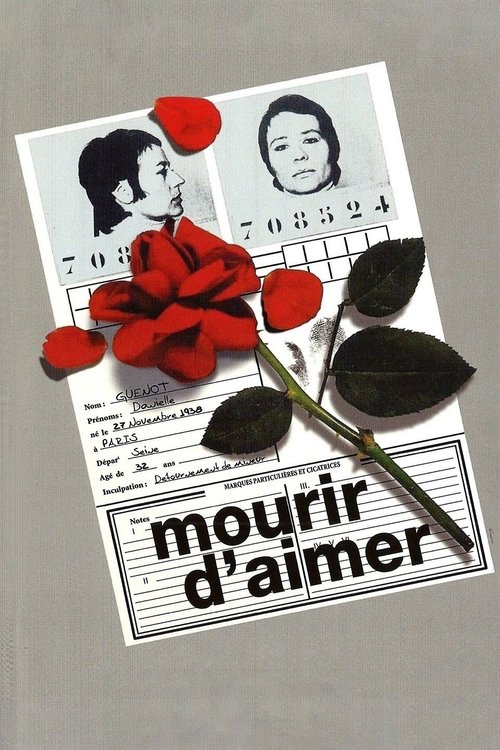
To Die of Love
1971
No user ratings available yet
Representation score: 5.4 out of 10

Representation Score
Limited
1967
Director
André Cayatte
Runtime
105 minutes
Average Rating
No ratings yetNew Showbiz Analysis
André Cayatte’s drama serves as a rigorous critique of judicial and institutional structures. It prioritizes the deconstruction of legal certainty and the volatility of truth over social identity representation. The film succeeds in challenging the stability of authority, using a high-stakes accusation to expose the friction between individual morality and state-mandated law. This provides a strong cultural critique of Western institutions. However, the film remains a product of its era, offering almost no visibility for LGBTQ+ or racial diversity. Characterizations are largely confined to the specific social and sexual hierarchies of mid-century France.
Category Breakdown
The film centers on sexual misconduct and power dynamics within a school setting. It does not include explicit non-binary gender identities or queer narratives, focusing instead on the violation of established social hierarchies.
A female student initiates the plot through her testimony, providing the central role. However, female characters are primarily defined through themes of victimization and sexual misconduct.
The film portrays a homogeneous French social strata. There is no evidence of racial or ethnic diversity within the primary cast, reflecting the demographic constraints of the era.
The narrative critiques the infallibility of state institutions and the rigidity of the law. It explores the tension between systemic legal morality and subjective human experience.
There is no discernible evidence regarding the portrayal of physical or neurodivergent disabilities in this work.
Present on Screen
Limited or Absent
Official Synopsis
A teenage girl accuses her primary schoolteacher, Jean Doucet (Jacques Brel), of trying to rape her. The police and the mayor investigate, but Doucet denies the charges. Two other students come forward to reveal more of Doucet's misconduct – one confessing to be his mistress. Doucet faces trial and hard labor if convicted.
1971

1964

1991
1960

1986
1977

1977
1961
No reviews yet. Be the first to share your thoughts on this movie!
Use the rating form above to leave a star rating and optional review.