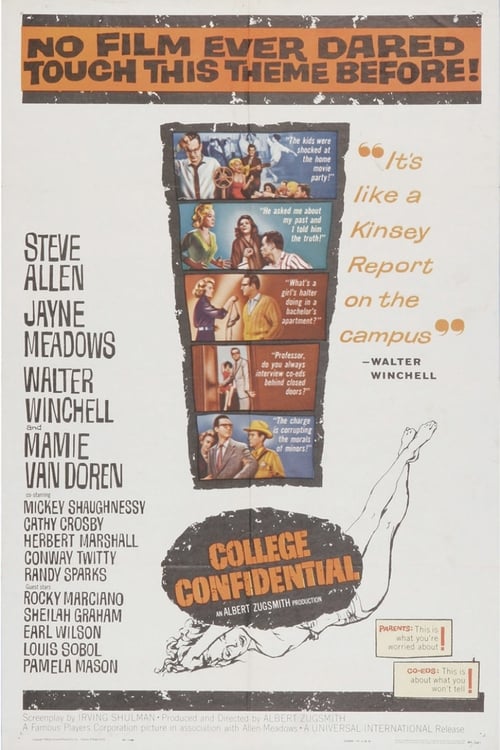
College Confidential
1960
No user ratings available yet
Representation score: 3.4 out of 10
Representation Score
Limited
1961
TV-PGDirector
Buzz Kulik
Runtime
89 minutes
Average Rating
No ratings yetNew Showbiz Analysis
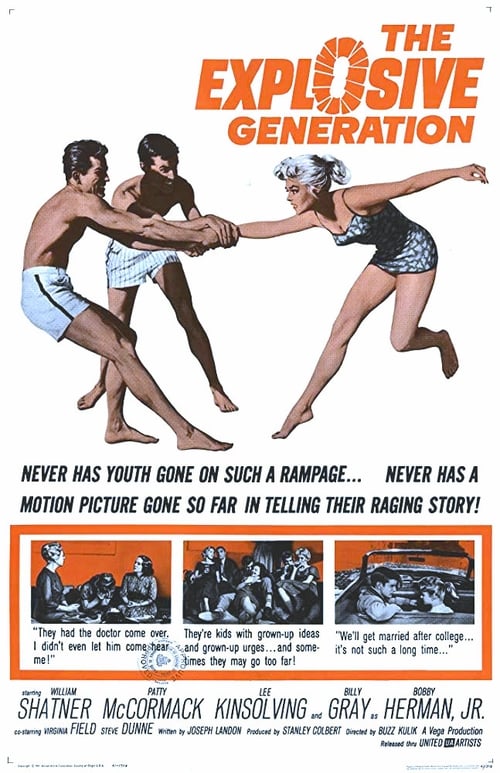
The Explosive Generation is a period drama centered on the tension between emerging social liberalization and established institutional hierarchies. It functions as a study of mid-century social censorship rather than a showcase of demographic breadth. While the film lacks modern markers of diversity regarding race and LGBTQ+ identity, it succeeds in cultural representation. The narrative highlights a protagonist who defies authority to address taboo subjects, emphasizing a shift in social mores. Ultimately, the film's impact stems from its exploration of institutional tension and the deconstruction of traditional moral gatekeeping, despite its largely homogeneous cast.
Category Breakdown
The film does not include any explicit LGBTQ+ characters or non-cisgender identities. The story focuses solely on adolescent sexual curiosity and institutional censorship.
Janet Sommers initiates the main conflict by questioning sex and dating norms. However, the central power struggle revolves around a male educator’s professional autonomy.
There is no indication of a racially diverse cast. The setting reflects the homogeneous social structures typical of a 1961 American school environment.
The story challenges traditional Western institutions by prioritizing student empowerment over parental and administrative control. It critiques mid-century social conservatism and institutional obedience.
The synopsis contains no mention of characters with physical, sensory, or neurodivergent disabilities.
Present on Screen
Limited or Absent
Official Synopsis
Peter Gifford is a likable, dedicated schoolteacher that teaches a senior life skills class. When student Janet Sommers brings up the topic of sex and dating, he asks students to write questions on the topic, and will cover them in the next class. The parents get wind of what Gifford is about to do, notify the principal, and he warns Peter not to read the questions in class. Gifford decides to go against this and is suspended. The whole student body protests, and the administration gets worried on what to do.
1960
1969

1967
1933
1960
1955
1963
2008
No reviews yet. Be the first to share your thoughts on this movie!
Use the rating form above to leave a star rating and optional review.