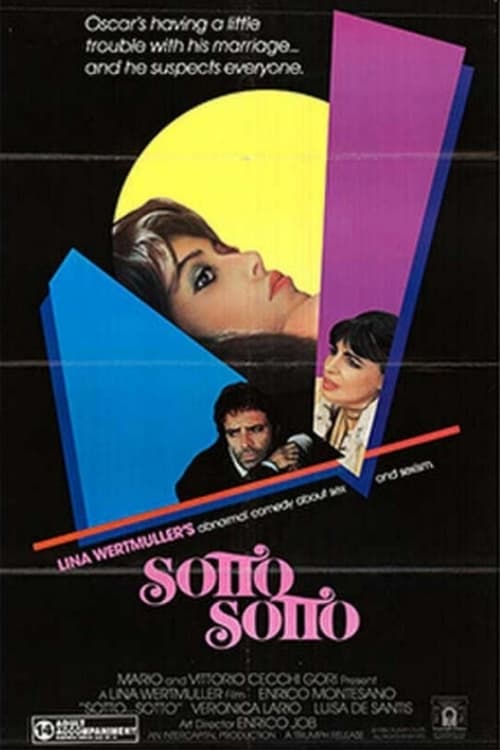
Sotto Sotto
1984
No user ratings available yet
Representation score: 6.1 out of 10
Representation Score
Fair
1965
PGDirector
Lina Wertmüller
Runtime
93 minutes
Average Rating
No ratings yetNew Showbiz Analysis
Lina Wertmüller’s film is a sophisticated critique of social structures, specifically targeting the perceived competence of traditional masculine roles. By framing male archetypes as sources of social dysfunction, the film actively dismantles patriarchal authority through satire. While the work excels at deconstructing gendered power dynamics, it lacks significant racial or LGBTQ+ the way different parts of someone's identity overlap. The narrative remains focused on European class and gender archetypes, offering limited representation for non-white or non-straight-centered identities. Ultimately, the film aligns with progressive cinematic traditions that prioritize systemic critique over the reinforcement of status quo hierarchies, making it a sharp, if localized, social commentary.
Category Breakdown
The film focuses on a satirical examination of masculinity. It does not include explicit queer-coded narratives or definitive LGBTQ+ character arcs.
The narrative disrupts traditional hierarchies by centering on the selfishness of male characters. It uses archetypes like the cynical professor to undermine patriarchal authority.
The film appears to be a localized Italian social satire. It lacks a multi-ethnic cast or characters that challenge Anglo-centric norms.
The story critiques traditional Western institutions and social hierarchies. It promotes moral relativism by highlighting the selfishness inherent in various established social roles.
There is no information available regarding the portrayal of physical or neurodivergent disabilities in this work.
Present on Screen
Limited or Absent
Official Synopsis
Multiple stories intersect in this satirical look at misogyny, male promiscuity and oppressive behaviour: a wealthy man discovers his wife suffers from kleptomania and decides to help her indulge her vice; a retired circus performer returns to knife-throwing with his once-lovely assistant, even though his vision has deteriorated; and a lecherous college professor attempts to sleep with his attractive female students.
1984
1963
1976
1973
1964

1969
1975
1966
No reviews yet. Be the first to share your thoughts on this movie!
Use the rating form above to leave a star rating and optional review.