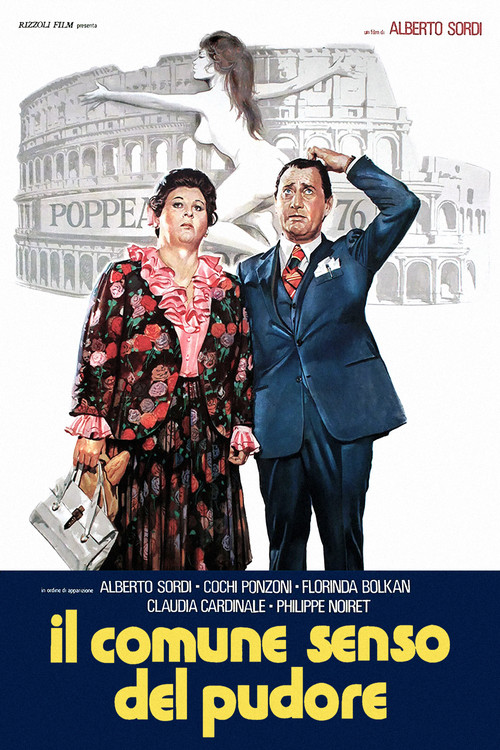
A Common Sense of Modesty
1976
No user ratings available yet
Representation score: 3.4 out of 10
Representation Score
Fair
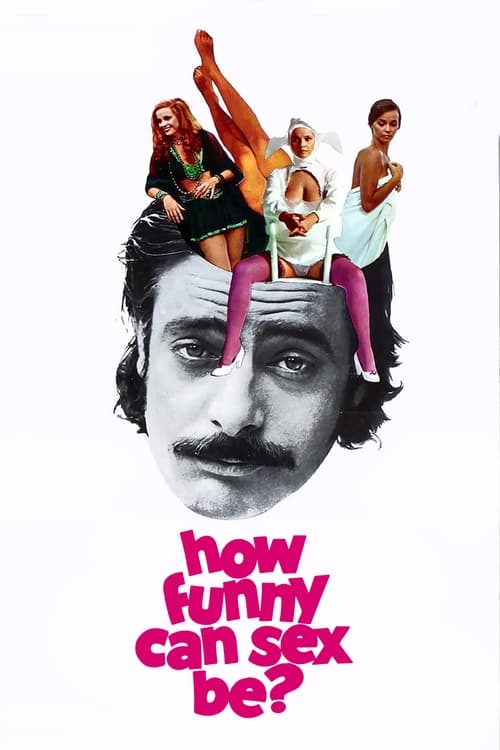
1973
RDirector
Dino Risi
Runtime
97 minutes
Average Rating
No ratings yetNew Showbiz Analysis
Dino Risi’s anthology uses a kaleidoscopic structure to dismantle the sanctity of marriage and the nuclear family. By focusing on individual desire, the film serves as a sophisticated deconstruction of mid-70s Italian social mores. The work achieves progressive value by challenging traditional religious and patriarchal norms. It replaces traditionalist Catholic morality with a focus on moral relativism and shifting social landscapes. While the film lacks racial and disability-based diversity, its systematic critique of the status quo provides a strong sense of cultural subversion.
Category Breakdown
The film explores sexual experimentation that challenges traditional social norms. However, the narrative remains primarily focused on straight relationships.
The story challenges patriarchal authority by centering on female desire. Male characters are often portrayed through a lens of comedic vulnerability and social inadequacy.
The cast appears largely homogeneous, reflecting the localized social constraints of 1970s Italy. The narrative does not prioritize diverse racial backgrounds.
The film excels at critiquing traditional Western institutions and Christian morality. It prioritizes secularism and individual sexual autonomy over idealized family structures.
There is no significant evidence regarding the inclusion or portrayal of characters with disabilities.
Present on Screen
Limited or Absent
Official Synopsis
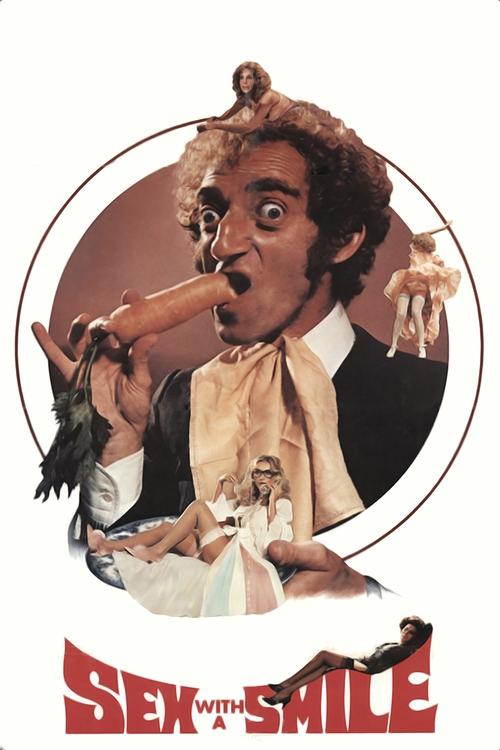
A nine-episode anthology film about love, sex, and marriage in contemporary, mid-'70s Italy.
1976
1963
1966
1962

1964
1964
1976

1963
No reviews yet. Be the first to share your thoughts on this movie!
Use the rating form above to leave a star rating and optional review.