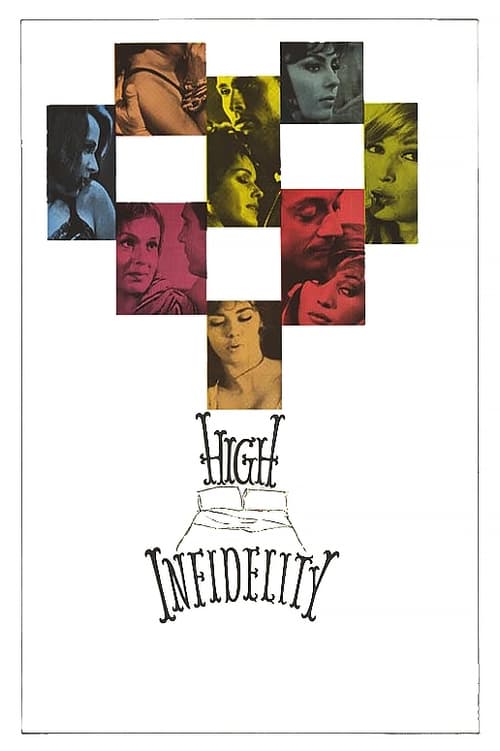
High Infidelity
1964
No user ratings available yet
Representation score: 4.1 out of 10
Representation Score
Fair
1966
Director
Mauro Bolognini, Mario Monicelli, Antonio Pietrangeli, Luciano Salce
Runtime
110 minutes
Average Rating
No ratings yetNew Showbiz Analysis
The film is a progressive work for its time, shifting the focus to the experiences of women across various social classes. It challenges traditional patriarchal narratives by highlighting the ability to act and autonomy of female characters. However, the film lacks the complexity of modern cinema, focusing on the demographic homogeneity of 1960s Italy. It offers limited representation of racial, LGBTQ+, and disability diversity.
Category Breakdown
The film does not include any explicit references to LGBTQ+ identities or same-sex relationships. The focus remains on traditional romantic and family dynamics.
The film centers around female protagonists who challenge traditional gender roles. Characters like the wealthy woman and the babysitter take active roles and defy conventional expectations.
The cast reflects the demographic makeup of 1966 Italy, showing no signs of multi-ethnic backgrounds or diverse casting.
The film questions traditional domestic and class structures by focusing on characters who make decisions based on personal desires rather than societal or religious norms.
There are no characters with visible or invisible disabilities in the film.
Present on Screen
Limited or Absent
Official Synopsis
Four comedic shorts explore quirky relationships and misadventures: a teenage girl's journey home, a self-serving babysitter, a husband confronting infidelity, and a wealthy woman's drunken escapades with her butler.
1964
1962
1970
1973

1966
1962
1974
1973
No reviews yet. Be the first to share your thoughts on this movie!
Use the rating form above to leave a star rating and optional review.