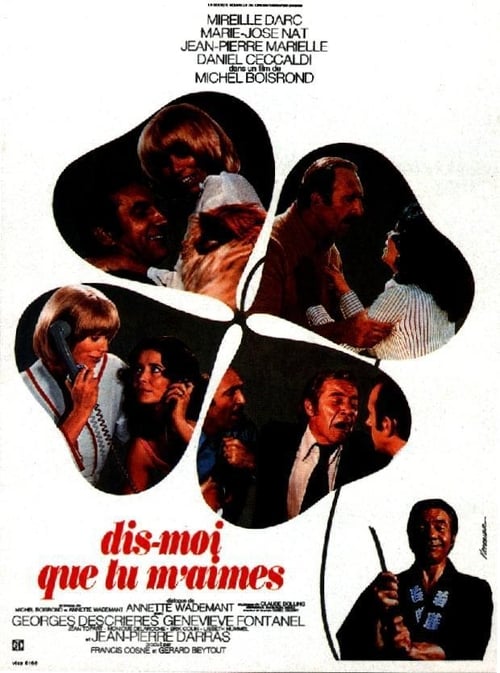
Tell Me You Love Me
1974
No user ratings available yet
Representation score: 3.9 out of 10

Representation Score
Fair
1976
Not RatedDirector
Bertrand Blier
Runtime
81 minutes
Average Rating
No ratings yetNew Showbiz Analysis
The film excels at deconstructing traditional social structures, particularly through its subversion of gender roles. By presenting men as exhausted by domesticity and women as assertive agents of power, it challenges mid-century bourgeois norms. However, the work remains a closed-loop study of a specific socio-economic class. The lack of racial and ethnic diversity limits its multi-layered reach, keeping the narrative focused on a narrow European milieu. Ultimately, the film is a postmodern rebellion against institutional stability. It prioritizes moral relativism and sexual liberation, making it a potent critique of Western social etiquette.
Category Breakdown
The film explores sexual fluidity and challenges traditional heterosexual expectations. While it doesn't include non-binary or transgender characters, it emphasizes a liberated approach to human connections over rigid romantic structures.
The film subverts traditional gender hierarchies by portraying masculinity as passive and overwhelmed. Female characters play a significant role in driving the story, driving the plot through psychological dominance and sexual assertiveness.
The narrative focuses on a predominantly white, upper-class Parisian circle. There is a notable lack of significant racial or ethnic diversity within the central cast.
The film critiques Western institutions like marriage and domesticity as restrictive. It frames the rejection of social decorum as a liberating pursuit of authenticity.
There are no significant depictions of visible or invisible disabilities that drive the narrative or serve as central character arcs.
Present on Screen
Limited or Absent
Official Synopsis
Two men, fortyish, worn out by their wives, abandon everything to go and live in the back of beyond. There they meet a truculent priest, a boozer, Émile who recalls them to life's simple pleasures. Calm is what they want. But soon their example inspires thousands of disorientated males...
1974

1974
1984
1986
1962
1969

1981
1970
No reviews yet. Be the first to share your thoughts on this movie!
Use the rating form above to leave a star rating and optional review.