Dolce
2000
No user ratings available yet
Representation score: 5.7 out of 10
Representation Score
Good
1970
Director
Shōhei Imamura
Runtime
105 minutes
Average Rating
No ratings yetNew Showbiz Analysis
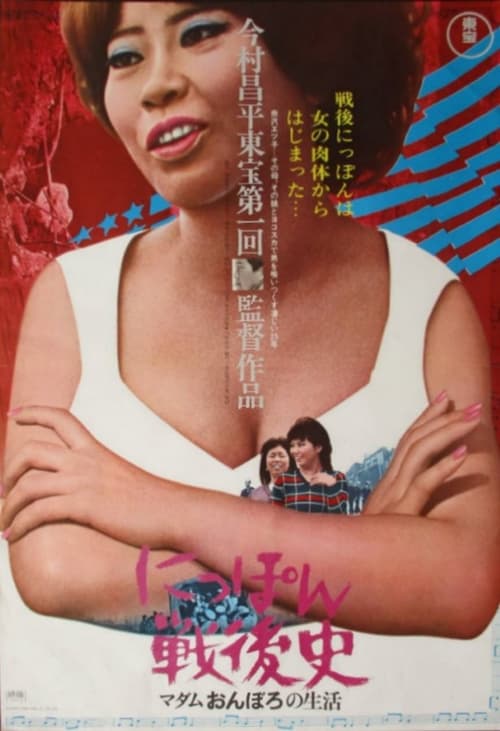
Shōhei Imamura uses the visceral life of a bar hostess to deconstruct traditional Japanese historiography. By centering on the female body and the margins of society, the film replaces state-driven narratives with a complex exploration of survival. The work excels at challenging patriarchal views of history, presenting women as strategic navigators of a volatile landscape. It provides a nuanced look at how racial and cultural boundaries are negotiated during the postwar occupation. While the film offers a profound critique of capitalism and social hierarchies, it lacks overt LGBTQ+ representation. The focus remains primarily on the economic and social survival of women within the hospitality industry.
Category Breakdown
The film focuses on the survival strategies of women in the postwar hospitality industry. It does not include explicit evidence of non-binary gender identities or specific LGBTQ+ character arcs.
The narrative centers entirely on the female perspective, using the hostess's viewpoint to examine national history. The protagonist, Etsuko, is portrayed as a resilient woman who drives her own survival rather than being a passive victim.
The film examines the blend of Japanese identity and foreign military forces in Yokosuka. It explores the transactional blending of cultures necessitated by the postwar occupation.
The film critiques emerging capitalist structures and the commodification of individuals. It prioritizes moral relativism, highlighting the systemic pressures and corruption within rapid modernization.
There is no significant evidence regarding the portrayal of visible or invisible disabilities in this work.
Present on Screen
Limited or Absent
Official Synopsis
Postwar Japan as it is described by Etsuko, the manager of a bar catering to foreigners in Yokosuka. The way of life of a woman brimming with vitality, who skipped the countryside right after the war and, with her womanhood as a weapon, lived through atomic bombings, black markets, prostitution aimed at American soldiers and the Korean War. Inserting newsreels, Shohei Imamura depicts the history of twenty-five years in the Japanese postwar by way of the female body. (doclisboa)
2000

1989

1995

1956

1994
2014
2019
2020
No reviews yet. Be the first to share your thoughts on this movie!
Use the rating form above to leave a star rating and optional review.