
The Battle of Chile: Part I
1975
No user ratings available yet
Representation score: 7.3 out of 10
Representation Score
Excellent
2011
Director
Iván Osnovikoff, Bettina Perut
Runtime
75 minutes
Average Rating
No ratings yetNew Showbiz Analysis
The film deconstructs grand historical narratives by focusing on individual, lived realities. It challenges traditional recording methods by shifting the historical gaze from male-dominated military institutions to the social spheres inhabited by women. The documentary excels in cultural critique and gendered perspectives but remains neutral on LGBTQ+ identities and lacks specific representation of physical disabilities. Ultimately, the work provides a fragmented, postmodern view of a nation in transition, emphasizing multi-layered survival over institutional triumph.
Category Breakdown
The film does not specifically focus on LGBTQ+ identities or stories. It maintains a neutral stance regarding queer identities.
The documentary centers the female gaze, highlighting the ability to act of women across generations. It shifts focus from military contexts to domestic social realities.
The film captures the diverse ethnic makeup of Santiago's urban landscape. It avoids Western-centric whitewashing by emphasizing local Chilean life.
The narrative critiques traditional power structures and neoliberalism. It prioritizes the subjective experiences of survivors over official state narratives, offering a post-colonial perspective on historical trauma.
The film does not focus on characters with visible disabilities. However, it explores the psychological impact of collective grief and trauma through its contemplative style.
Present on Screen
Limited or Absent
Official Synopsis
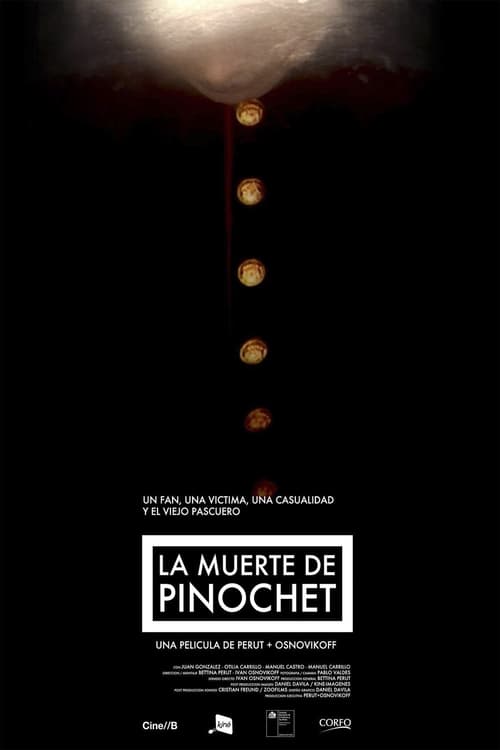
On December 10th, 2006, General Pinochet dies unexpectedly at Santiago's Military Hospital. His decease triggers a 24 hours revival of political divisions that marked with violence and death Chilean recent history. With high quality original footage and testimonies of four characters that deeply experienced a journey of strong contrasts and surrealistic nuances, the film narrates in an innovative, exciting way the ending of a key chapter in Chilean history.
1975
1985
2012
2012
2017
2014
2017
2015
No reviews yet. Be the first to share your thoughts on this movie!
Use the rating form above to leave a star rating and optional review.