The D.T.'s
1966
No user ratings available yet
Diversity score: 4.0 out of 10
1960
Director
Zdeněk Podskalský
Runtime
80 minutes
Average Rating
No ratings yetSynopsis
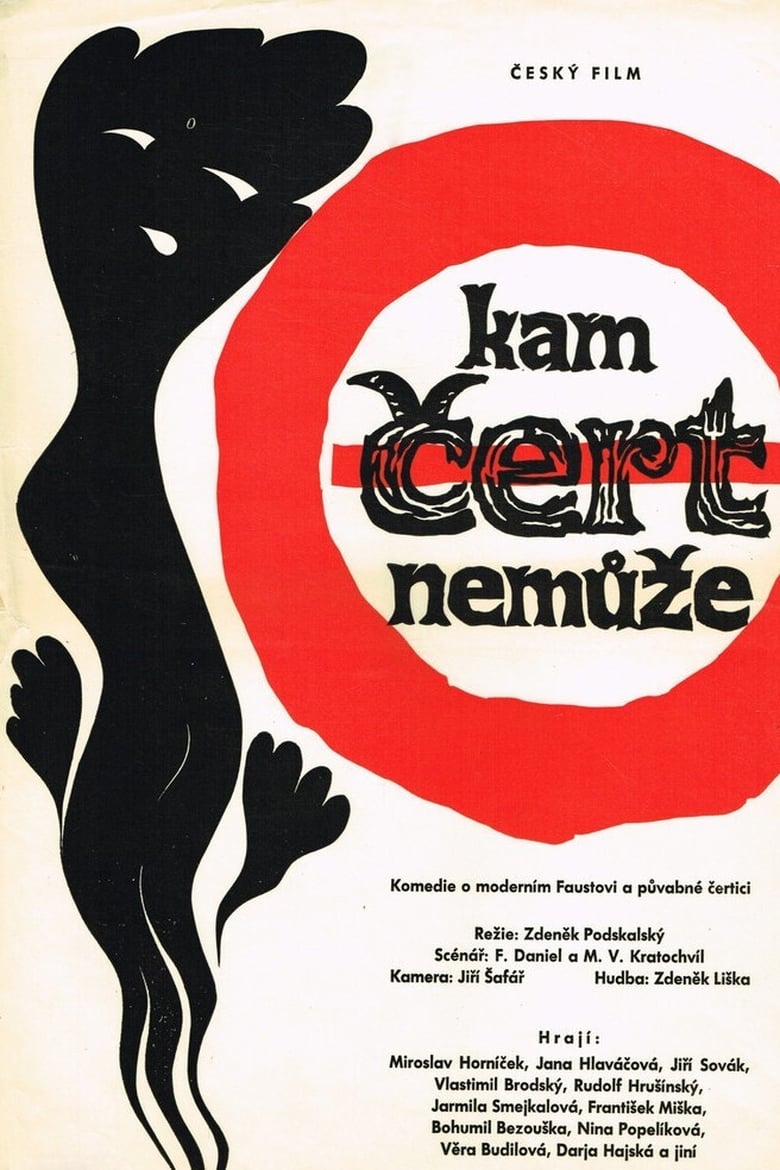
Kam Cert Nemuze by director Zdenek Podskalsky is a routine farce that slowly builds up steam to some rib-tickling slapstick episodes. (Miroslav Hornicek) is a deluded young man who is convinced he is Faust incarnate. This turn of mind leads to some ludicrous situations, such as when he believes a woman is really a cat. Before he can be rounded up and interned wherever they keep people with this type of a problem, love enters his life and the clouds that obscured his vision begin to dissipate.
Overall Score
Fair
Category Breakdown
LGBTQ+ Representation
The film lacks explicit LGBTQ+ characters or narratives. The plot relies on traditional romantic tropes to resolve the protagonist's psychological state.
Gender Representation
The female lead functions as a stabilizing force for the male lead. The resolution reinforces traditional gendered social equilibrium rather than subverting hierarchies.
Racial & Ethnic Diversity
The cast appears ethnically homogeneous, reflecting the 1960 Czechoslovakian production context. There is no evidence of diverse or non-Anglo-Saxon majority casting.
Religious & Cultural Diversity
The narrative uses comedy to explore subjective morality and psychological complexity. It avoids a strictly didactic or religious approach to the protagonist's mental state.
Disability Representation
The protagonist experiences psychological delusions, but the story prioritizes his emotional recovery through love. It remains unclear if the portrayal avoids comedic tropes.
Strengths
Areas for Improvement
AI Analysis
Kam čert nemůže is a mid-century Czechoslovakian comedy that prioritizes character-driven narrative over social critique. While it offers a nuanced look at subjective reality through its protagonist's delusions, it remains firmly rooted in the era's conventional social structures. The film's strength lies in its psychological complexity, framing mental dissociation through a lens of comedy rather than pure pathology. However, this approach does not extend to broader social representation, as the cast and romantic structures remain highly traditional. Ultimately, the film functions as a localized character study. It lacks the intersectional depth or systemic challenge to demographic norms required to move beyond a standard period comedy.
1966
1959

1966
1967
1981
1980
1970

1967
2003
1959

1965
1965
No reviews yet. Be the first to share your thoughts on this movie!
Use the rating form above to leave a star rating and optional review.