Brooklyn, Fulton Street
1896
No user ratings available yet
Diversity score: 2.8 out of 10
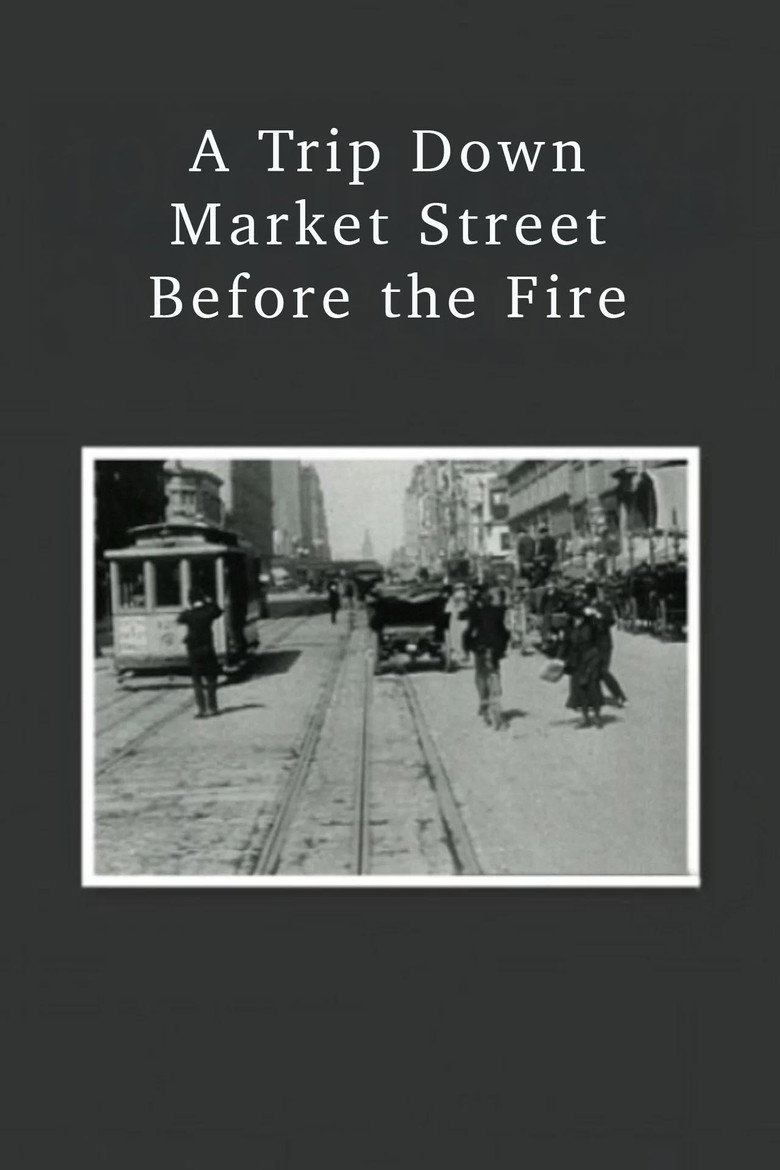
1906
Not RatedDirector
Harry Miles
Runtime
12 minutes
Average Rating
No ratings yetSynopsis
A Trip Down Market Street is a 13-minute actuality film recorded by placing a movie camera on the front of a cable car as it travels down San Francisco’s Market Street. A virtual time capsule from over 100 years ago, the film shows many details of daily life in a major American city, including the transportation, fashions and architecture of the era. The film begins at 8th Street and continues eastward to the cable car turntable, at The Embarcadero, in front of the San Francisco Ferry Building. It was produced by the four Miles brothers: Harry, Herbert, Earle and Joe. Harry J. Miles cranked the Bell & Howell camera during the filming.
Overall Score
Limited
Category Breakdown
LGBTQ+ Representation
The film functions as a continuous observational shot of urban transit. There is no evidence of non-cisnormative gender identities or same-sex intimacy depicted within the frame.
Gender Representation
Women are visible within the public sphere, engaging in commerce and transit. However, they appear within traditional gender hierarchies and period-appropriate social roles.
Racial & Ethnic Diversity
The film captures a diverse urban demographic, including Chinese-American individuals. These groups reflect San Francisco's multicultural reality but function primarily as part of the ambient background.
Religious & Cultural Diversity
The footage documents a capitalist, Western urban environment. It reinforces the stability of the pre-earthquake social order without deconstructing Western institutions.
Disability Representation
There is no significant or intentional depiction of neurodivergence or physical disability. The footage focuses on crowd energy and cable car mechanics instead.
Strengths
Areas for Improvement
AI Analysis
This 1906 actuality film serves as a vital historical time capsule, capturing the kinetic energy of San Francisco's Market Street. It provides a rare, unvarnished look at early 20th-century urban life, transportation, and architecture. While the film offers a glimpse into a multicultural metropolitan hub, the representation is largely passive. Ethnic groups and women are visible within the frame, but they lack individual agency or narrative depth, appearing instead as part of the city's ambient movement. Ultimately, the documentary reflects the rigid social hierarchies and traditional norms of its era. It functions as an observational record of a stable, Western capitalist society rather than a medium for social subversion.
1896

1896
1908
1896
1896

1896

1927
1906
1940
1900
1896
1909
No reviews yet. Be the first to share your thoughts on this movie!
Use the rating form above to leave a star rating and optional review.