Place du Pont
1897
No user ratings available yet
Representation score: 0.6 out of 10
Representation Score
Minimal
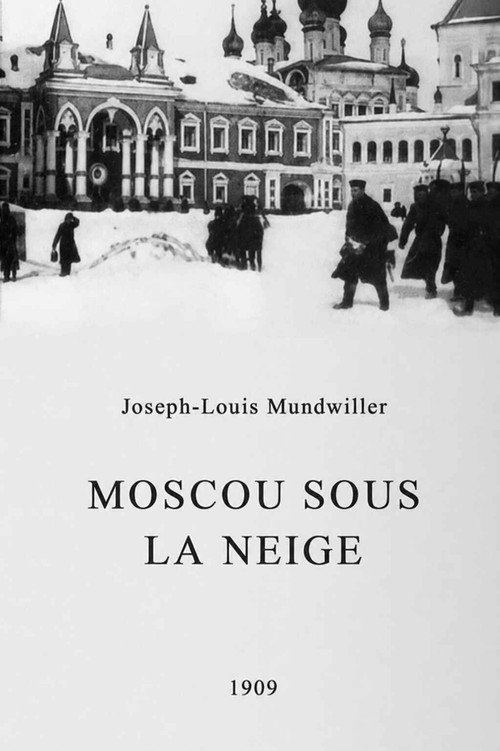
1909
Director
Joseph-Louis Mundwiller
Runtime
8 minutes
Average Rating
No ratings yetNew Showbiz Analysis
Moscow Clad in Snow serves as a historical document capturing the social and commercial life of early 20th-century Moscow. It adheres closely to the demographic norms of the Russian Empire in 1909, offering a snapshot of the era's social structure without challenging traditional gender roles or exploring diverse identities. The film's strength lies in its preservation of a specific moment in history, reflecting the homogeneity and social norms of its time without providing a platform for modern perspectives on diversity.
Category Breakdown
The film portrays early 20th-century Moscow without showing any non-traditional gender identities or same-sex relationships.
Women are shown as a group skiing together rather than as individuals. Men are depicted wearing great coats, suggesting a traditional social hierarchy.
The film reflects the ethnic makeup of the Russian Empire in 1909, presenting a homogeneous image consistent with the time's social norms.
It acts as a record of established institutions like the Kremlin and local markets. However, it does not critique the imperial power structures or systemic issues.
There are no characters with visible or invisible disabilities. The focus is on able-bodied activities like skiing and bustling street commerce.
Present on Screen
Limited or Absent
Official Synopsis
The film is in four parts. First, the camera pans the Kremlin and Marshal's Bridge. Sleds are parked in rows. Horse-drawn sleighs run up and down a busy street. Next, we visit the mushroom and fish market where common people work and shop. In Petrovsky Park are the well-to-do. Men are in great coats. A file of six or seven women ski past on a narrow lane. Last, there's a general view of Moscow. A slow pan takes us to a view above the riverfront where the film began.
1897

1927
1903

1929
1898
1901
1896
1895
No reviews yet. Be the first to share your thoughts on this movie!
Use the rating form above to leave a star rating and optional review.