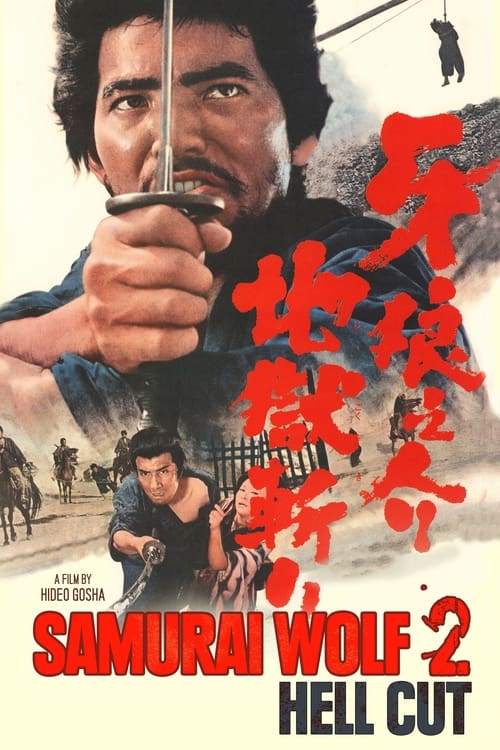
Samurai Wolf II
1967
No user ratings available yet
Representation score: 5.0 out of 10

Representation Score
Fair
1966
Director
Hideo Gosha
Runtime
75 minutes
Average Rating
No ratings yetNew Showbiz Analysis
Hideo Gosha’s film offers a gritty deconstruction of the samurai genre, emphasizing individual struggle over institutional loyalty. While it lacks modern multi-layered breadth, it provides progressive value through its critique of established social hierarchies. The narrative relies heavily on traditional romantic clichés, centering the conflict on a female character who, despite her central role, lacks significant control over the plot. The film's strength lies in its subversion of bushido through a morally ambiguous protagonist. Ultimately, the work is a product of its historical context. It succeeds in presenting a complex outsider against a systemic backdrop, even if its representation of gender and identity remains limited by the conventions of its era.
Category Breakdown
The film does not include explicit LGBTQ+ characters or non-straight relationships. The story focuses on a traditional romantic conflict.
A blind woman serves as the central catalyst for the plot. However, the male characters have more control over the events, leaving her as a recipient of protection.
The cast is ethnically uniform, reflecting the historical Japanese setting. The film sticks to the period's social constraints without diverse casting.
The story challenges traditional ideas of honor by focusing on a savage, vagrant protagonist. It emphasizes personal ethics over rigid feudal hierarchies.
The blind female protagonist offers a rare instance of visible disability in 1960s genre cinema. Her sensory experience drives much of the emotional tension.
Present on Screen
Limited or Absent
Official Synopsis
This is the story of a vagrant samurai – the solitary, savage and scrupulous Kiba – who arrives at a village to defend a beautiful, blind woman against a sinister plot. Her assailants then send against him another samurai, named Sana, who is without scruples. The fight between them will become personal, for the honor and love of the blind woman.
1967

1956
1967
1962
1966
1980
1970
1979
No reviews yet. Be the first to share your thoughts on this movie!
Use the rating form above to leave a star rating and optional review.