
Samurai Wolf
1966
No user ratings available yet
Representation score: 6.0 out of 10
Representation Score
Excellent
1970
Director
Hirokazu Ichimura
Runtime
86 minutes
Average Rating
No ratings yetNew Showbiz Analysis
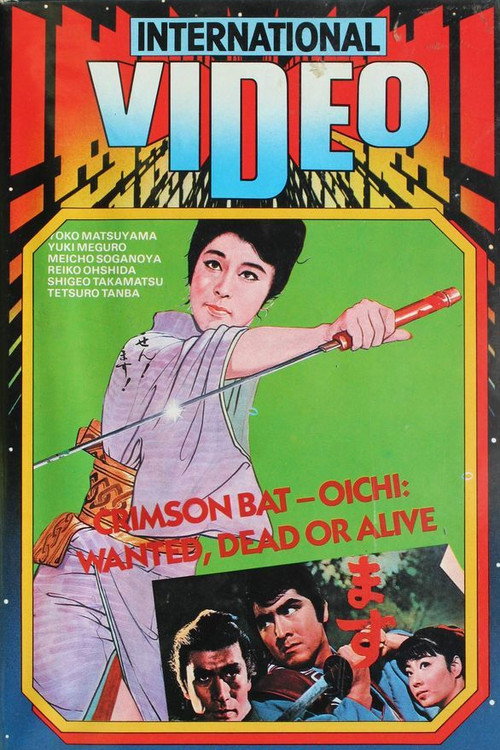
Crimson Bat - Oichi: Wanted, Dead or Alive stands out for its character-driven approach to period action. By centering a blind female protagonist, the film provides a refreshing subversion of traditional gender and disability clichés common in 1970s cinema. The narrative effectively uses its historical setting to critique institutional corruption. The conflict between individual survival and state-sanctioned greed provides a meaningful layer of social commentary. While the film remains ethnically homogeneous and lacks LGBTQ+ representation, its focus on ability to act and the disruption of power structures creates a progressive framework for its era.
Category Breakdown
The film does not explicitly depict LGBTQ+ identities. The story centers on a traditional romantic relationship between a woman and her partner, following conventional romantic structures.
Oichi challenges traditional gender roles by serving as a strong protagonist who play a significant role in driving the story. She drives the plot by facilitating an escape, subverting the typical damsel in distress cliché.
Set in a specific Japanese historical context, the cast is ethnically homogeneous. It avoids a Western-centric perspective by focusing on a non-Western cultural framework and setting.
The story critiques systemic corruption through an antagonist who is a high-ranking official. It emphasizes individual ability to act over state-sanctioned greed and centralized authority.
The protagonist is blind, and her disability is treated as a fundamental part of her identity. She navigates high-stakes conflict with ability to act rather than being a source of pity.
Present on Screen
Limited or Absent
Official Synopsis
Oichi the Blind helps a woman escape the clutches of a high government official to go off with the man she loves. The official puts a reward on her head of fifty gold pieces and soon a menagerie of bounty hunters are after her skin. Three of them band together to accomplish this, one an expert swordsman, another a huge judo master and the third is deadly with a chain. To escape, she heads for the fishing town of Itso but soon comes face to face with Sankuro, the swordsman...
1966

1964
1967
1962
1966
1967
1979
1977
No reviews yet. Be the first to share your thoughts on this movie!
Use the rating form above to leave a star rating and optional review.