That's Gratitude
1934
No user ratings available yet
Representation score: 1.1 out of 10
Representation Score
Minimal
1930
PassedDirector
Millard Webb
Runtime
69 minutes
Average Rating
No ratings yetNew Showbiz Analysis
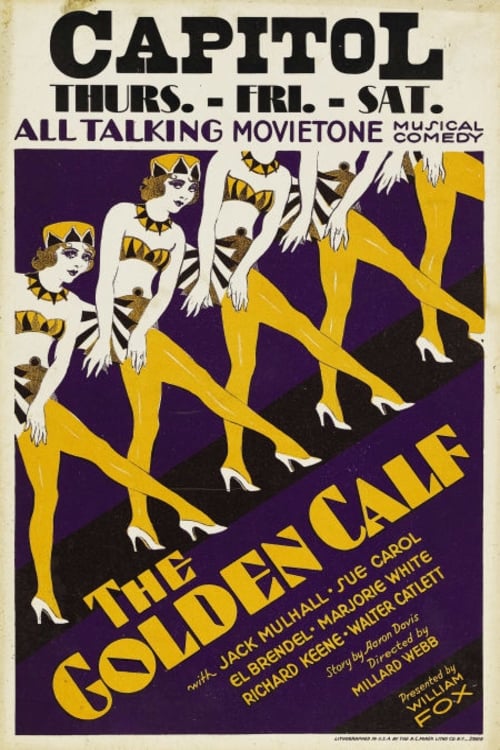
The Golden Calf is a quintessential product of the early sound era, leaning heavily into established studio-era musical comedy clichés. The narrative structure prioritizes aesthetic transformation and romantic stability over any meaningful social subversion. While the film offers a brief moment of female-driven ability to act through the protagonist's makeover, the underlying themes remain tethered to traditional gender hierarchies. The focus on a woman's metamorphosis to achieve romantic desirability reinforces the male gaze rather than challenging it. Ultimately, the film lacks depth in reflecting multiple aspects of identity. It functions as a standard piece of escapist entertainment that conforms to the demographic and social norms of 1930s cinema.
Category Breakdown
The film follows a traditional romantic arc between a female protagonist and her male employer. It lacks queer narratives or non-cisgender identities, adhering to the assumption that everyone is straight or cisgender.
The plot utilizes the Pygmalion cliché, focusing on a woman's physical transformation to satisfy the male gaze. While a female friend drives the makeover, the central power dynamic remains a traditional romantic conquest.
The film likely reflects the homogeneous casting standards of its era. There is no evidence of diverse representation or inclusion of different backgrounds within the narrative.
This escapist musical prioritizes romanticized social hierarchies and traditional courtship. It reinforces conventional social mobility through aesthetic change rather than offering any critique of Western institutions.
There is no information available regarding the depiction of physical, sensory, or neurodivergent characters in this production.
Present on Screen
Limited or Absent
Official Synopsis
In this pygmalionesque musical, a drab secretary leads a boring life until a good friend intervenes. The friend begins a total make-over upon her friend. First she slathers her in mud-packs, and then she encases her in lovely silk dresses. Soon the plain woman is transformed into an extraordinary beauty. It is no surprise that her boss, not knowing her true identity, falls hopelessly in love with her. Singing, dancing and romancing ensues. Songs include: "A Picture No Artist Can Paint," "You Gotta Be Modernistic," "I'm Telling the World About You," "Maybe Someday," and "Can I Help It."
1934

1938

1926

1934

1991

1926
1935

1937
No reviews yet. Be the first to share your thoughts on this movie!
Use the rating form above to leave a star rating and optional review.