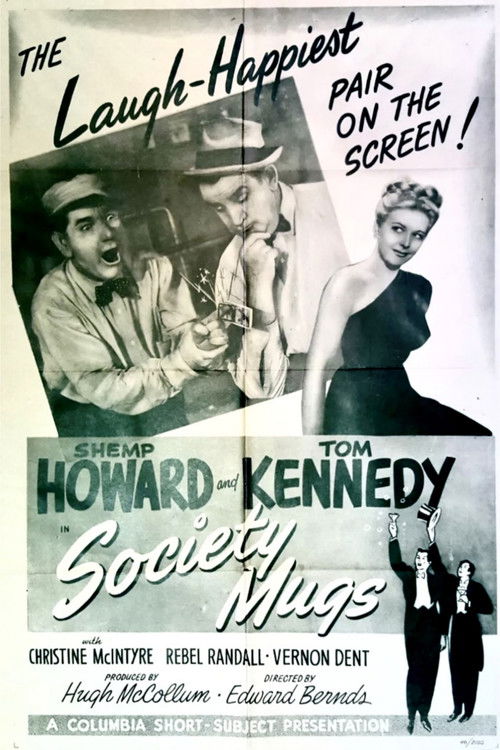
Society Mugs
1946
No user ratings available yet
Representation score: 1.8 out of 10
Representation Score
Limited
1934
PassedDirector
Gus Meins
Runtime
18 minutes
Average Rating
No ratings yetNew Showbiz Analysis
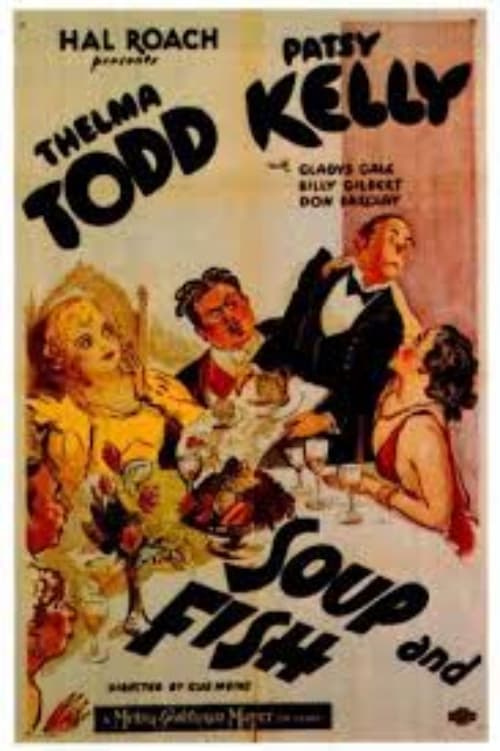
Soup and Fish is a traditional 1930s comedy that relies heavily on established social archetypes. While the film provides a platform for female-led ability to act through its protagonists, Thelma and Patsy, this ability to act is expressed through slapstick rather than a subversion of gender roles. The film's primary conflict is rooted in class friction, pitting working-class salon attendants against a wealthy socialite and a visiting count. This setup reinforces standard social hierarchies by using class chaos as a comedic device rather than a tool for social critique. Ultimately, the film lacks multi-layered complexity. It reflects the homogeneous casting and narrow narrative focus typical of the early sound era, prioritizing situational humor over diverse representation.
Category Breakdown
The film does not include any LGBTQ+ characters or non-cisgender identities. It follows typical 1930s comedic themes centered around class misunderstandings.
The story features female protagonists who drive the plot through slapstick humor. While women lead the narrative, they embody traditional archetypes such as the refined lady and the mischievous prankster.
The narrative focuses on the tension between white working-class salon attendants and high-society elites. There is no indication of a multi-ethnic cast or characters who play a significant role in driving the story.
The comedy arises from the clash between social classes and aristocratic pretensions. It uses class distinctions for situational humor rather than a systemic critique.
There is no information available regarding the depiction of physical or mental disabilities in this film.
Present on Screen
Limited or Absent
Official Synopsis
At a ritzy beauty salon, while a mud pack is on her face, a wealthy socialite invites Thelma and Patsy, two salon attendants, to a party, mistakenly thinking they are social acquaintances whom she wants to entertain a visiting count. Just before our working-class pair arrives at the party, the hostess is called away to see to an ill dog. Thelma tries to behave in a refined way, but Patsy, with a head full of practical jokes and a bra filled with trick gadgets, turns the party on its head. The butler calls the hostess back to her home. Is Thelma and Patsy's moment in high society coming to a crashing end?
1946
1940
1937
1936
1944

1946
1931
1926
No reviews yet. Be the first to share your thoughts on this movie!
Use the rating form above to leave a star rating and optional review.