
The Great McGinty
1940
No user ratings available yet
Representation score: 1.7 out of 10
Representation Score
Minimal
1937
NRDirector
A. Edward Sutherland
Runtime
80 minutes
Average Rating
No ratings yetNew Showbiz Analysis
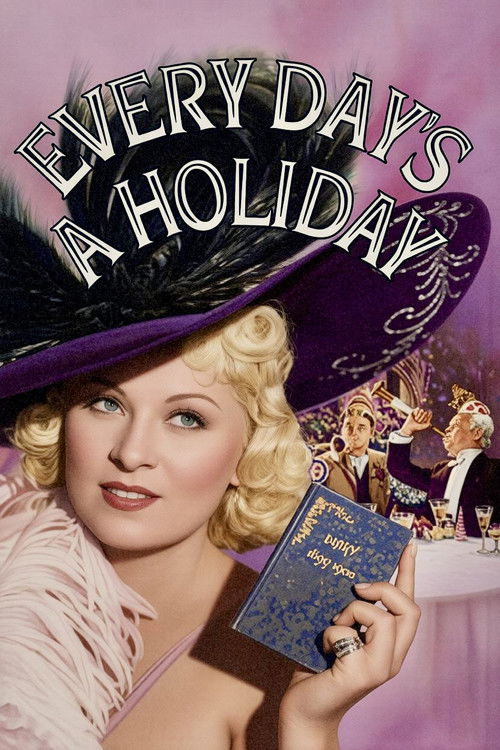
Every Day's a Holiday is a conventional 1930s comedy that operates within the established social hierarchies of its time. While the female lead is a clever driver of the plot, her influence is ultimately channeled through traditional romantic and gendered expectations. The film lacks meaningful diversity, focusing on Western political maneuvering and Anglo-Saxon archetypes. It avoids any subversion of the period's social norms or institutional structures. Ultimately, the film reinforces, rather than challenges, the status quo of early 20th-century civic and gender roles.
Category Breakdown
The film does not include any LGBTQ+ characters or narratives. Romantic tension is solely focused on the heterosexual relationship between Peaches O'Day and Captain Jim McCarey.
Peaches O'Day shows intelligence and plays a significant role in navigating social circles. However, her influence is often tied to her persona as a sultry brunette and her eventual support of a male political figure.
The cast appears to center around Anglo-Saxon archetypes typical of turn-of-the-century New York. There is no indication of a multi-ethnic cast or diverse racial representation.
The story emphasizes traditional Western institutions such as law enforcement and the political process. The plot focuses on social climbing and civic integration without critiquing these structures.
There is no mention of characters with visible or invisible disabilities in the narrative.
Present on Screen
Limited or Absent
Official Synopsis
In turn-of-the-century New York City, con artist Peaches O'Day befriends Captain Jim McCarey, a cop who must turn her in unless she leaves town. The clever Peaches returns transformed as sultry brunette and Parisian sensation Mademoiselle Fifi. After catching her show, a crooked mayoral candidate tries to shut it down when Peaches demurely declines his romantic overtures. McCarey jumps in the race for mayor, and the loyal Peaches fervently campaigns for him.
1940
1933
1933
1926
1931

1934
1933
1932
No reviews yet. Be the first to share your thoughts on this movie!
Use the rating form above to leave a star rating and optional review.