Doll Face
1945
No user ratings available yet
Representation score: 1.5 out of 10
Representation Score
Minimal
1945
PassedDirector
Charles Barton
Runtime
73 minutes
Average Rating
No ratings yetNew Showbiz Analysis
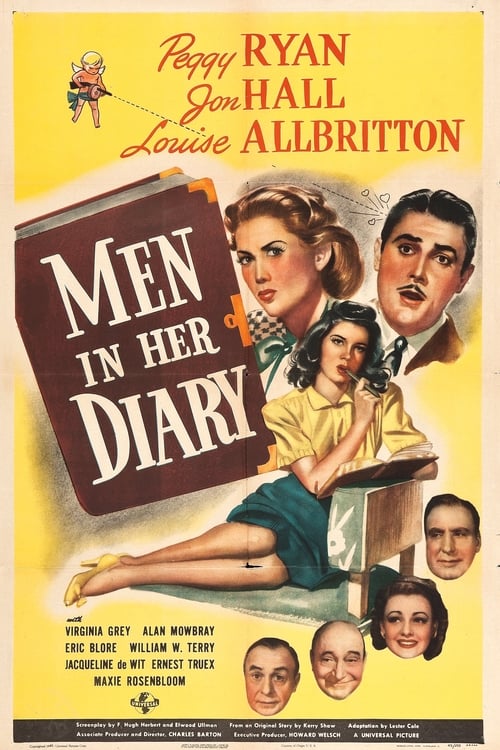
Men in Her Diary is a product of the mid-1940s studio system, heavily influenced by the Hays Code and traditional social hierarchies. The narrative relies on established comedic clichés that prioritize conventional moral frameworks and domestic stability. The film lacks complexity in its portrayal of diverse identities and social dynamics, focusing instead on a narrow view of social roles. It presents a world defined by standard employment structures and traditional romantic arcs, offering little deviation from the era's mainstream norms. Ultimately, the film serves as a snapshot of mid-century studio comedy, where character identities and social dynamics remain largely unexamined and traditional.
Category Breakdown
The film does not include any LGBTQ+ characters or stories that challenge the assumption that everyone is straight or cisgender. The plot centers around traditional romantic relationships and marital issues.
The main character works as a secretary and her diary leads to a divorce, but the story ends with a conventional romantic resolution. Her role reflects the standard professional hierarchy of the 1940s.
The film features a predominantly white cast with no mention of non-white or non-Anglo-Saxon characters, reflecting the homogeneous nature of mainstream studio productions from the 1940s.
The story unfolds within a traditional Western context focused on domestic drama. It adheres to standard social structures like marriage and employment without any critical commentary.
There are no characters with visible or invisible disabilities in this comedy.
Present on Screen
Limited or Absent
Official Synopsis
Singer/Dancer Peggy Ryan neither sings nor dances in this comedy in which she plays a secretary, whose life has no romance because she devotes all of her time to her attractive older sister. But she does keep a diary that contains some fact and many fictional entries. One such is read by the wife of her boss who promptly sues for a divorce. Virginia Grey stars in a musical produced by Hall and sings (possibly dubbed) "Makin' a Million" and "Keep Your Chin Up." No spoiler to add that Ryan gets a boyfriend and Hall and Allbritton are reunited before this one runs it course.
1945
1954
1945

1933

1944
1944

1944
1946
No reviews yet. Be the first to share your thoughts on this movie!
Use the rating form above to leave a star rating and optional review.