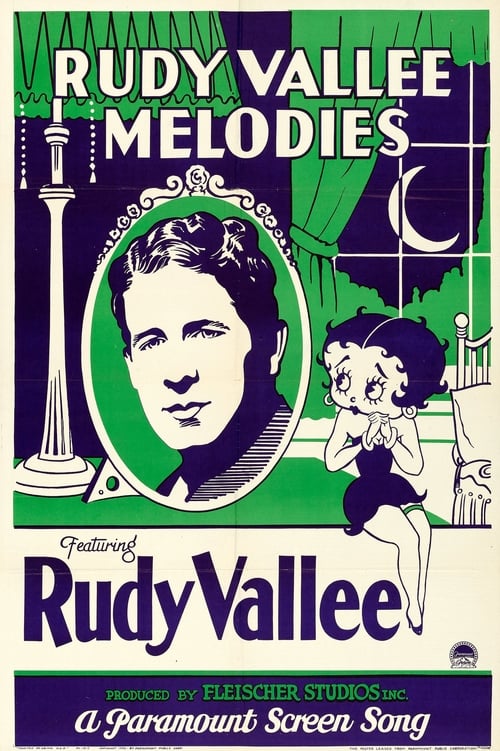
Rudy Vallee Melodies
1932
No user ratings available yet
Representation score: 2.0 out of 10
Representation Score
Minimal
1931
PassedDirector
Dave Fleischer
Runtime
6 minutes
Average Rating
No ratings yetNew Showbiz Analysis
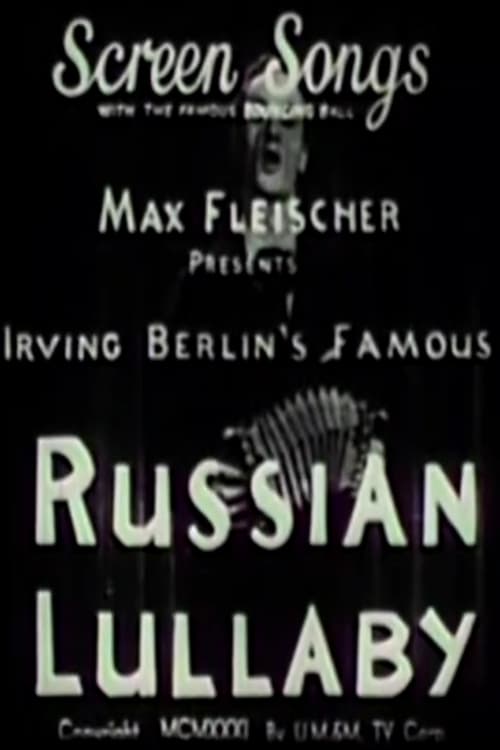
Russian Lullaby is a Screen Songs short that prioritizes musical performance and audience participation over character-driven storytelling. Because it functions as a hybrid of animation and live-action variety, it lacks the structural depth needed for exploring complex identities. The content reflects the homogeneous entertainment standards of the early 1930s. It presents a singular performer and traditional musical themes without attempting to challenge social norms or provide multi-layered representation. Ultimately, the film serves as a period-specific entertainment product, offering minimal engagement with progressive social frameworks and focusing instead on the mainstream commercial standards of its era.
Category Breakdown
The short focuses on a standard Irving Berlin song and does not include any representation of LGBTQ+ identities or narratives that challenge the assumption that everyone is straight or cisgender.
As a musical performance piece, the film lacks a narrative structure to evaluate gender hierarchies. It follows the era's standard presentation of performers without challenging traditional roles.
The film centers on a singular performer and standard animation. There is no indication of a diverse cast or actors from non-Anglo-Saxon backgrounds to challenge historical norms.
The work operates within the conventional framework of early 20th-century American popular culture. It emphasizes standard musical appreciation without engaging with systemic or secular critiques.
There is no evidence of characters or performers with visible or invisible disabilities being integrated into the musical segments.
Present on Screen
Limited or Absent
Official Synopsis
A Max Fleischer Screen Songs cartoon with part of it devoted to cartoon animation and the other part to Arthur Treacy, radio's Street Singer, doing the Irving Berlin song, with words and dancing-ball double-exposed at the lower left of the frame for audience participation.
1932
1933
1937
1932
1933

1932
1931

1934
No reviews yet. Be the first to share your thoughts on this movie!
Use the rating form above to leave a star rating and optional review.